 English
 русский
 Français
 Español
 عربى
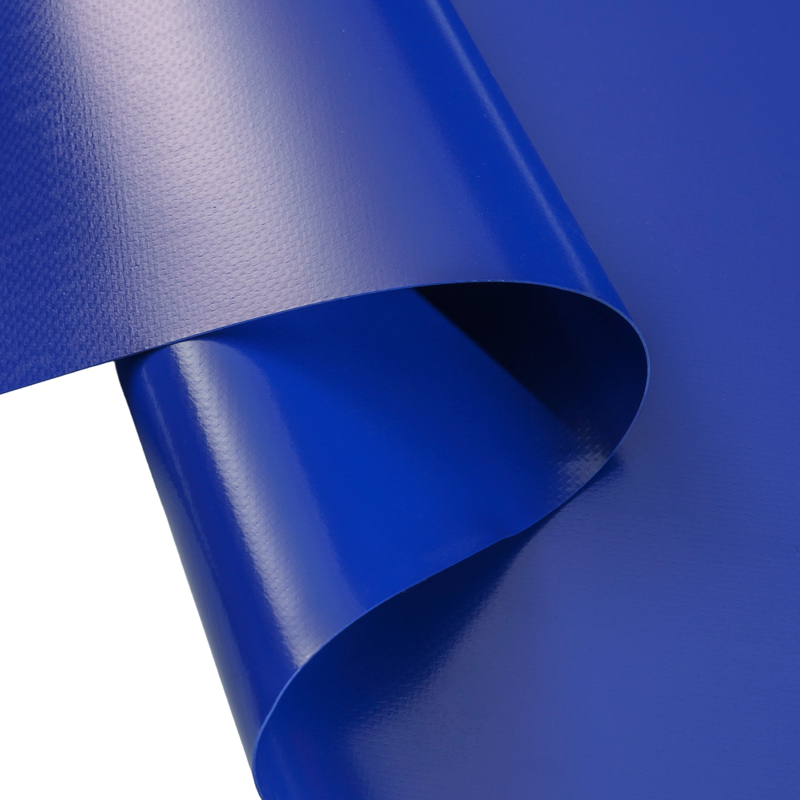
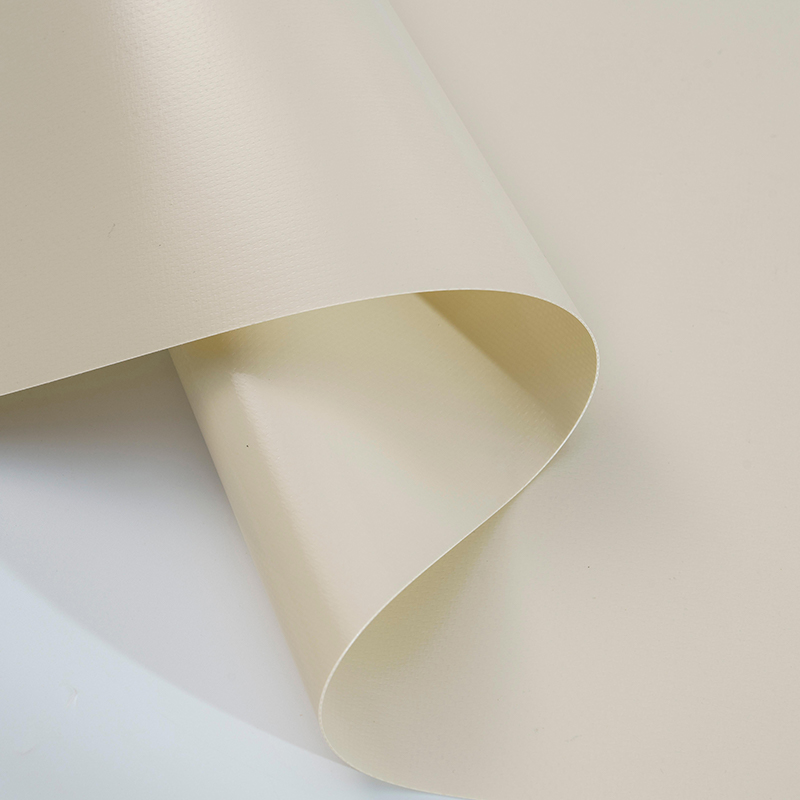
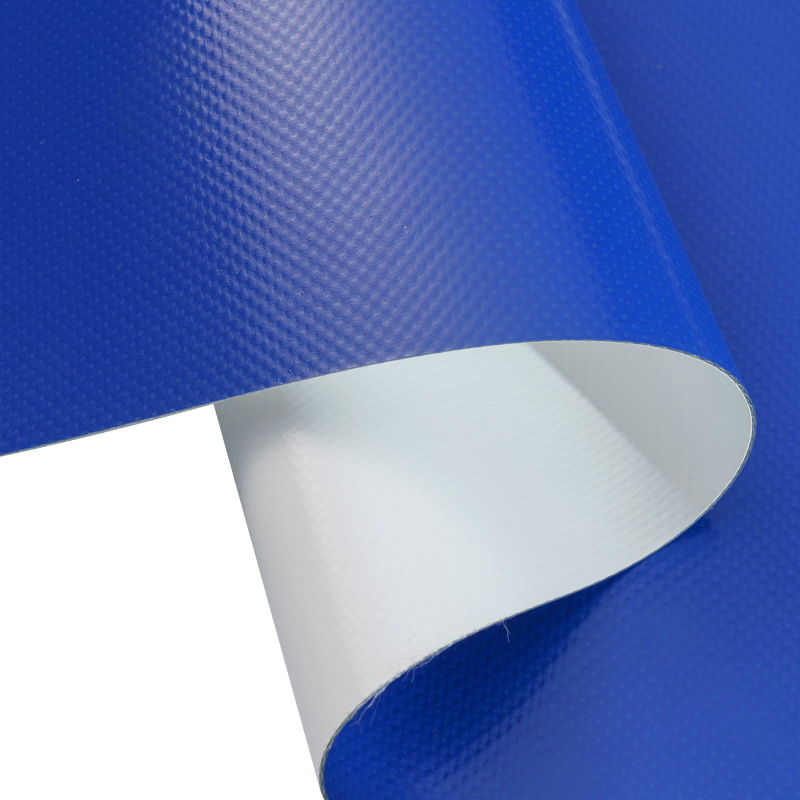
PVC Inflatable Fabric, PVC Cover Material and PVC Mesh Fabric: A Practical Guide for B2B Buyers PVC inflatable fabric, PVC cover material and PVC mesh fabric share the same polyester-and-PVC foundation, but each is specified for a different job: airtightness and weld strength fo...
READ MORE
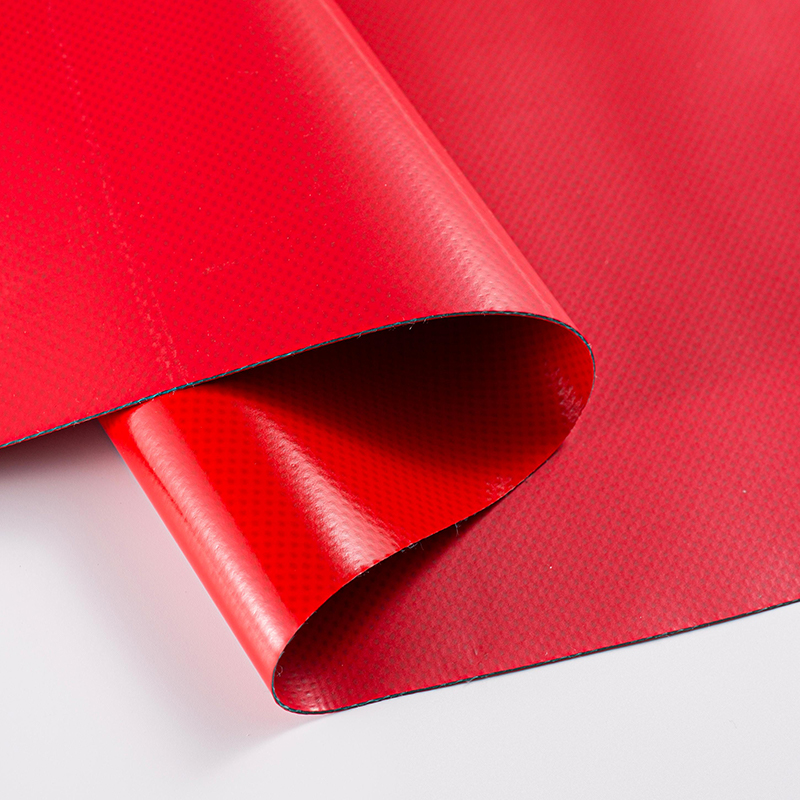
Reinforced PVC Tent Cloth Heavy Duty
Product Overview
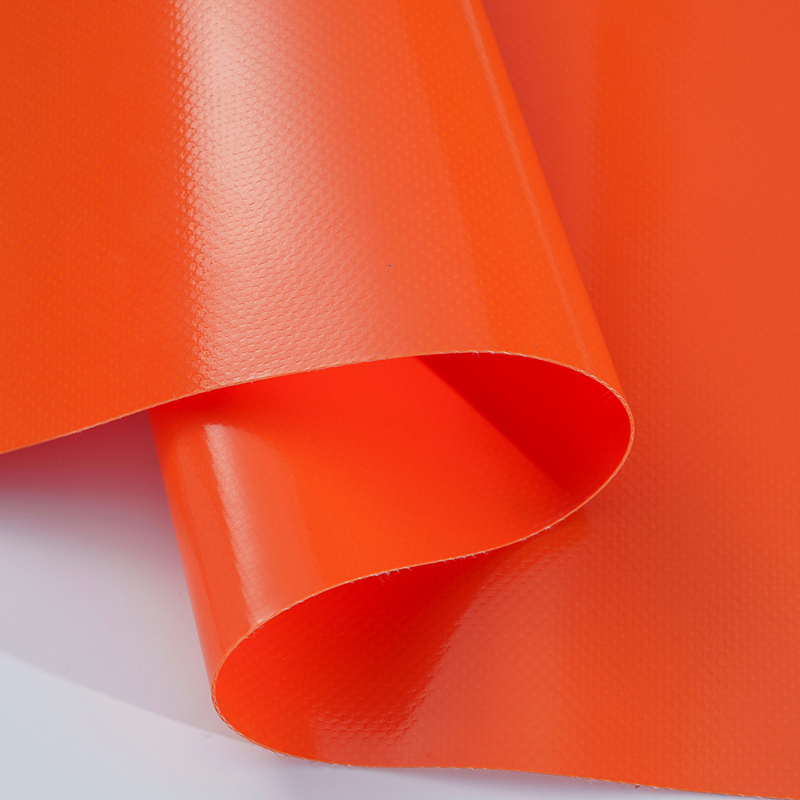
The Reinforced PVC Tent Cloth Heavy Duty is made of high-density polyester base fabric with double-sided PVC coating, offering extremely high strength and wear resistance. It also provides excellent waterproof and flame-retardant performance, specially designed for load-bearing and long-term outdoor use.
- Product Parameter
- Product Details
| Reinforced PVC Tent Cloth Heavy Duty | |||
| Test Items | Unit | Measured Value | Test Method |
| Support Cloth | -- | 100% Polyester | DIN 6000 |
| Type of Coating | -- | PVC coated on both sides | -- |
| Width | -- | UP TO 3.2m | ( DIN EN ISO 2286-1) |
| Total Weight | g/m2 | 900 | DIN EN ISO 2286-2 |
| Yarn | D | 1000 X 1000 | DIN EN ISO 2060 |
| Specification | inch(plain weave) | 30 X 30panama | DIN EN 1049-2 |
| Tensile strength | N/5cm | Warp 4200 | DIN 53354 |
| Weft 3800 | |||
| Tear strength | N/5cm | Warp550 | DIN 53356 |
| Weft 500 | |||
| Adhesion Strength | N/5cm | 110 | ASTM D 751-2000 |
| Lacquer | Acrylic or PVDF | ||
| Flame Retardant | B1,B2,NFPA-701 B-S2,do | ||
Product Features
Material: 100% polyester base fabric, strong structure, high load-bearing capacity
Coating Type: Double-sided PVC coating, optional acrylic or PVDF, enhancing durability and protective performance
Fabric Width: Up to 3.2 meters, suitable for large-area coverage
Weight: 900 g/m², thickened and reinforced fabric suitable for heavy-duty applications
Mechanical Performance:
Tensile Strength: Warp 4200 N/5cm, Weft 3800 N/5cm
Tear Strength: Warp 550 N/5cm, Weft 500 N/5cm
Adhesion: 110 N/5cm
Flame Retardant Performance: B1, B2 grades, compliant with NFPA-701 B-S2 standard
Weave: 30×30 Panama structure, further enhancing fabric toughness.
Applications
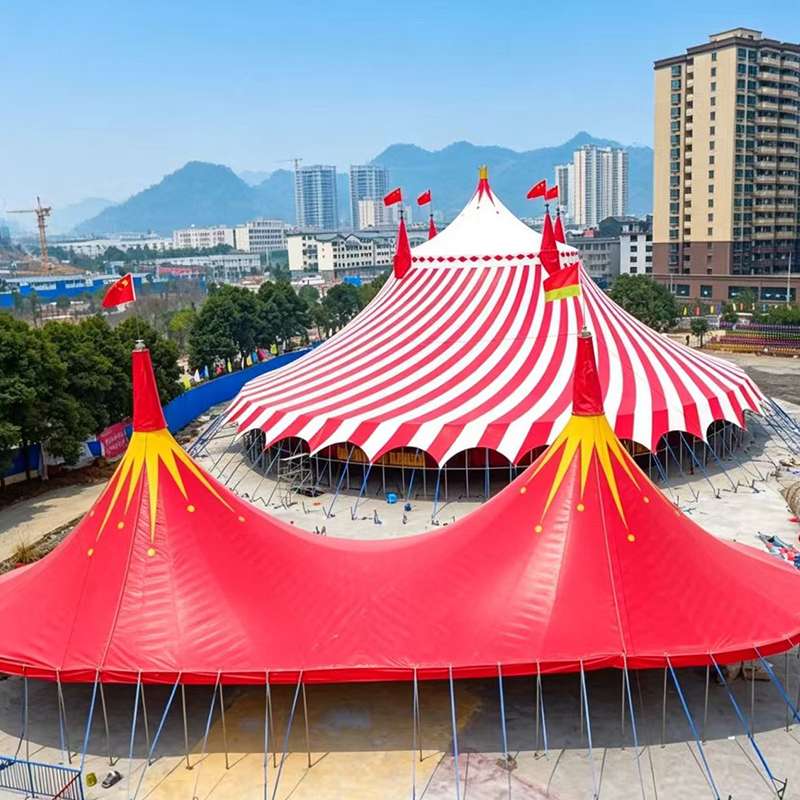
Suitable for heavy-duty outdoor tents, industrial storage tents, large sunshades, protective coverings, and other scenarios requiring extremely high strength and durability.
Related Products
About Us
Anhui Kingtex Material Technology Co, Ltd.
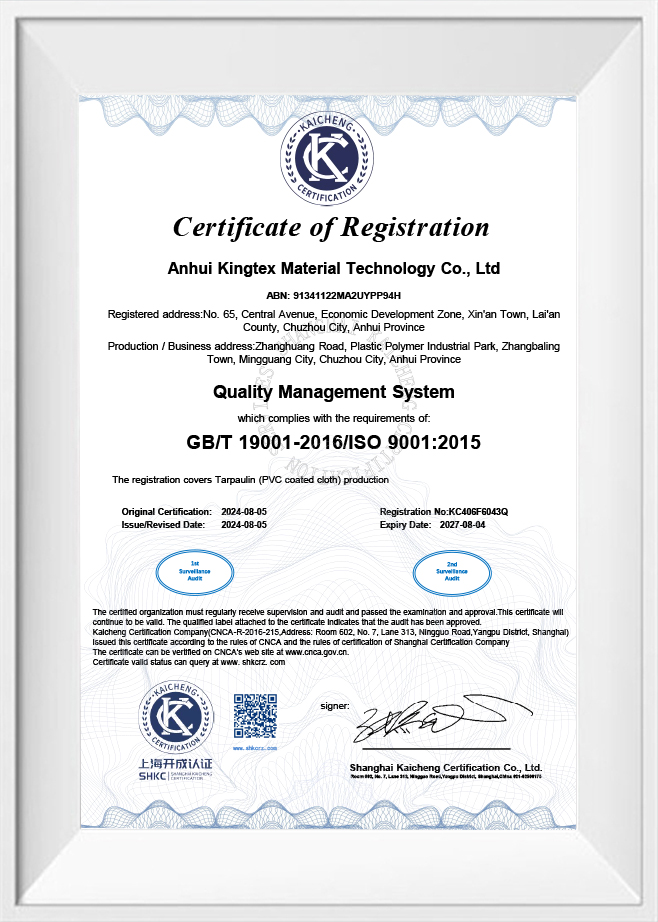
As China Reinforced PVC Tent Cloth Heavy Duty Suppliers and OEM Reinforced PVC Tent Cloth Heavy Duty Factory, Anhui Kingtex Material Technology Co., Ltd. specializes in the R&D, production, and processing of new materials, including architectural membranes, PVC tarpaulins, PVC inflatable fabrics, mesh fabrics, biogas membranes, knife-coated fabrics, fireproof nets, intelligent luminescent materials, and others. The company has established a complete and scientific quality management system to ensure product quality control throughout the entire process.
Equipped with professional PVC cold lamination, hot lamination, coating, as well as a full set of testing and inspection instruments, the company lays a solid quality foundation for products with advanced production equipment and mature manufacturing technology. At the same time, a professional scientific research and technical team has been formed. Relying on core technological R&D capabilities, it continuously provides solid support for product innovation and stable quality.
We sincerely invite customers at home and abroad to visit our factory, negotiate cooperation, and seek common development.
-
-
Architectural Membrane Fabric, PVC Tent Fabric and Truck Cover & Side Curtains Fabric: A Practical Selection Guide Architectural membrane fabric, PVC tent fabric and truck cover & side curtains fabric are all polyester base cloths coated with PVC, but each is tuned to a ...
READ MORE -
PVC Fabric Product Guide: How to Select the Right Material for Structures, Covers, Inflatables and Industrial Use A PVC fabric product performs reliably when four decisions are made in the right order: the base cloth construction, the coating weight, the topcoat finish, and the ...
READ MORE
1、Product Overview
A tent fails at its weakest point, not at its average strength. Corners, ridge lines, eaves, seams, and guy points carry far more load than the open wall panels, and they are also where sun, rain, and repeated handling do the most harm. Reinforced PVC Tent Cloth Heavy Duty is made with that fact in mind. It is a PVC coated polyester fabric built on a high-tenacity scrim, finished with a durable coating, and supplied in a form that supports reinforced seams, hems, and load points.
The fabric is used for event marquees, industrial and storage tents, temporary workshops, relief shelters, and large garden or commercial canopies. Anhui Kingtex Material Technology Co., Ltd. produces PVC tarpaulins, knife-coated fabrics, and architectural membranes, and applies cold-lamination, hot-lamination, and coating processes with a full set of testing instruments. That production base supports tent cloth made for repeated pitching and long outdoor service.
This article walks through a tent from its stress points outward. It covers where the load goes, how wind translates into force, how seams and weight classes affect performance, and how to select and care for the cloth. It is written for tent makers, rental operators, and project buyers who source PVC tent fabric from a PVC coated tent fabric manufacturer.
| Item | Reference description |
|---|---|
| Base cloth | High-tenacity polyester scrim |
| Coating | PVC on both faces |
| Surface | Matte or glossy, with optional lacquer |
| Joining | High-frequency welding, hot-air welding, or sealed sewing |
| Options | Ultraviolet stabilizer, anti-mildew, flame-retardant, color matching |
2、Where a Tent Carries Its Load
A tent is a tensioned shell. Wind pushes on the walls, the frame resists, and the fabric ties the two together. The load does not spread evenly through the cloth. It concentrates at the points where the fabric meets the frame, the ground, or another panel.
The side view marks five zones with orange circles. The ridge at the top carries roof tension and holds the main seam. The eaves on each side are where the roof panel meets the wall and where rainwater runs off. The guy points near the ground connect the shell to ropes and stakes, so they carry the full pull from wind gusts. The dashed vertical line represents a roof seam, which must transfer load from one panel to the next. Reinforcement belongs in these zones, which is why heavy duty tent cloth is made to take welded seams, doubled hems, and reinforced patches.
(1) What Reinforced Means in Practice
The term covers three things. The first is a base cloth built from thick, high-tenacity yarn so the scrim carries load without stretching too far. The second is a coating thick enough to protect the yarns and give a surface that welds well. The third is fabrication detail, such as reinforcement patches at corners and tape over seams.
(2) Why Heavy Duty Cloth Suits Repeated Use
Rental and event tents are pitched, struck, packed, and moved many times a year. Each cycle flexes the coating and rubs the fabric against frames and ropes. A heavier coating and a stronger scrim give more margin against that wear.
3、What Stresses a Tent Over Its Service Life
The bar chart ranks five stress sources by relative importance on a hundred-point scale. Wind loading comes first at 90, because it drives the highest forces in the structure. Sun exposure follows at 75, since ultraviolet light slowly changes both the coating and the color. Rain and pooling rank next, as water that collects on a sagging roof adds weight and strain. Handling and packing score 55, and ground contact scores 40. The values are indicative and meant to show the pattern, not to report measured data. They show that a good tent cloth must handle both sudden loads and slow weathering.
(1) Turning Wind Speed into Force
Wind pressure rises with the square of wind speed. The standard dynamic pressure formula is half the air density times the speed squared. With an air density of 1.225 kilograms per cubic meter, a 10 meters per second wind gives about 61 pascals, and a 30 meters per second wind gives about 551 pascals.
The line chart plots dynamic pressure at five wind speeds using the standard formula. Pressure climbs slowly at first, then rises steeply, because speed is squared. Doubling the wind speed from 10 to 20 meters per second raises the pressure about four times, from 61 to 245 pascals. For a wall panel of 6 square meters at 20 meters per second, the dynamic pressure acts on an area that gives a force of roughly 1.5 kilonewtons before shape factors are applied. Real loads depend on tent shape, openings, and exposure, so the chart shows only the base relationship. It explains why guy points and seams need reinforcement.
4、Seams, Hems, and Joining Methods
A tent is only as sound as its seams. PVC coated cloth can be joined in several ways, and each has a place.
| Method | How it works | Typical use |
|---|---|---|
| High-frequency welding | Electric field heats and fuses the PVC layers | Long, watertight panel seams |
| Hot-air welding | Heated air softens the surface under a pressure roller | Hems, pockets, and repairs |
| Sewing with sealing tape | Stitched seam covered by a welded tape | Load-bearing edges and corners |
| Adhesive bonding | Compatible adhesive joins cleaned surfaces | Field patches and small repairs |
Fabricators often combine methods, for instance welding the roof seams and sewing reinforcement webbing at the corners. Weld quality depends on temperature, pressure, and dwell time, so trial seams on the actual roll are standard practice. Using cloth from one production lot also helps keep these settings stable across a project.
5、Choosing a Weight Class by Tent Type
Tent cloth is commonly grouped into light grades around 450 to 550gsm, medium grades around 600 to 750gsm, and heavy grades around 800 to 900gsm. The grid below shows how four tent types usually relate to those grades.
Each cell in the grid is shaded from light green for limited fit to dark green for strong fit. Garden canopies fit the light grades best, since they are small and handled by one or two people. Event marquees fit the medium grades, which balance strength and packing weight. Industrial halls fit the heavy grades, because they stay up for long periods and carry larger spans. Relief shelters fit both medium and heavy grades, as they face varied weather and rough handling. The shading is indicative and based on common practice. Specific projects may call for different choices.
The radar chart compares reinforced heavy duty cloth with a standard light tent cloth on five attributes, using relative scores. The green shape for the reinforced cloth reaches further on tear resistance, seam strength, wind tolerance, and weather use. The orange shape for the standard cloth reaches further on packed lightness, which matters for tents moved by hand or carried in small vehicles. The two shapes show the trade-off between robustness and portability. A tent that stays up for a season in exposed conditions benefits from the green profile. A small tent packed after every use may do well with the orange one. The scores are indicative and meant for planning.
6、Application Scenarios and Case Examples
(1) Event Marquees and Exhibition Halls
Rental tents for weddings, trade shows, and sports events are pitched many times a year. A reinforced cloth with a lacquered surface cleans easily and keeps its color, and welded roof seams keep rain out.
(2) Industrial and Storage Tents
Temporary warehouses, workshops, and equipment shelters stay in place for months. Heavier cloth resists flutter and wear, and flame-retardant or anti-mildew options can be added where the site calls for them.
(3) Relief and Emergency Shelters
Shelters must go up quickly and withstand changing weather. Reinforced cloth gives margin against rough handling. Kingtex also produces disaster prevention nets, so teams working on emergency supplies can coordinate related materials.
(4) Commercial Canopies and Outdoor Dining
Restaurants and markets use large canopies in all seasons. A durable coating withstands sun and rain, and printed or colored cloth carries branding.
7、Selection Checklist
- Define tent size, span, and the expected wind exposure at the site.
- Estimate how often the tent will be pitched, struck, and moved.
- Select a weight class that balances strength and handling.
- Specify the surface: lacquered for easy cleaning, matte for low glare, or printable for branding.
- Add options such as ultraviolet stabilizer, anti-mildew treatment, or flame-retardant compound where needed.
- Plan seam layout, corner reinforcement, and guy point details with the fabricator.
- Test weld and hem samples from the actual roll before cutting the full set.
A heavy duty tent cloth factory that controls coating, lamination, and testing in one site makes lot consistency easier to manage. Kingtex invites customers to visit its facility for tours and business discussions, where samples and technical questions can be reviewed in person.
8、Pitching, Care, and Storage
(1) Pitching
Pitch on a clean, level surface and avoid dragging the cloth over sharp objects. Tension the roof evenly so it sheds water, because slack areas collect pools that add weight and strain.
(2) Anchoring
Spread load over all guy points and check ropes and stakes after the first hours of exposure. Add ballast or extra anchors when winds are forecast to rise.
(3) Cleaning
Wash with water and a mild soap using a soft brush, then rinse and let the cloth dry fully before packing. Avoid strong solvents and hard abrasive tools.
(4) Inspection and Repair
Check seams, hems, eyelets, and corner patches at the start and end of each season. Patch small tears with compatible PVC material on a clean, dry surface, rounding the patch corners.
(5) Storage
Store clean and dry in a cool, ventilated place away from sunlight and sharp objects. Change fold lines between packings so the same crease is not stressed every time.
9、Frequently Asked Questions
(1) What does reinforced mean for tent cloth?
It refers to a strong polyester scrim, a durable PVC coating, and fabrication details such as welded seams and reinforced corners that carry load at stress points.
(2) Which tents use heavy duty PVC cloth?
Event marquees, industrial and storage tents, relief shelters, and commercial canopies are common users.
(3) How are the panels joined?
Panels are usually joined by high-frequency or hot-air welding, often with sewn and taped reinforcement at corners and edges.
(4) Can colors, prints, and finishes be customized?
Color, gloss level, lacquer, printing, and functional additives can be discussed with Anhui Kingtex Material Technology Co., Ltd. during sampling.
(5) How should a tent be cleaned and stored?
Use mild soap and water with a soft brush, dry the cloth completely, and store it clean and dry away from sunlight.
(6) How do I choose a weight class?
Start with tent size, wind exposure, and how often the tent is moved. Frequent movement favors lighter grades, and long outdoor service favors heavier ones.
10、Summary
Reinforced PVC Tent Cloth Heavy Duty is built around the way tents actually carry load: at ridges, eaves, seams, and guy points. A strong scrim, a durable coating, and weldable surfaces support reinforced fabrication, and the choice of weight class and finish should follow tent size, wind exposure, and handling frequency. Anhui Kingtex Material Technology Co., Ltd. welcomes tent makers and project buyers to request samples and discuss specifications for event, industrial, and shelter applications.
We warmly welcome customers from home and abroad to visit our factory, negotiate cooperation, and create a bright future together.
Contact Information
- +86-13967331581
- +86-550-2356878
info@kingtexfabric.com
Address
- No. 12, Weiyi Road, Laian County Economic Development Zone, Chuzhou, Anhui, China
Get in Touch
Copyright ©Anhui Kingtex Material Technology Co, Ltd. All Rights Reserved. Wholesale Reinforced PVC Tent Cloth Heavy Duty Factory
