
 English
 русский
 Français
 Español
 عربى
Industry News
PVC Fabric Product Guide: Types, Specs and Selection for B2B Buyers
Content
- 1 PVC Fabric Product Guide: How to Select the Right Material for Structures, Covers, Inflatables and Industrial Use
- 2 What Defines a PVC Fabric Product and Why Construction Matters</h2 >
- 3 Coated fabric Base cloth: about 30% PVC compound: about 62% Functional additives: about 8%
- 4 Main PVC Fabric Product Families and Where Each One Fits</h2 >
- 5 Fabric Weight by Product Category</h2 >
- 6 Mesh fabric 330 Light tarpaulin 550 Inflatable fabric 750 Heavy tarpaulin 780 Architectural membrane 1000 Biogas membrane 1100 Knife-coated heavy duty 1250 0 500 1000
- 7 Fire Performance and Safety Requirements for PVC Fabric Products</h2 >
- 8 Specification Checklist for OEM and ODM PVC Fabric Orders</h2 >
- 9 Fabrication, Welding and Installation Practice</h2 >
PVC Fabric Product Guide: How to Select the Right Material for Structures, Covers, Inflatables and Industrial Use
A PVC fabric product performs reliably when four decisions are made in the right order: the base cloth construction, the coating weight, the topcoat finish, and the joining method. For most outdoor structures, truck covers and storage covers, a polyester base cloth in the 840D to 1300D range combined with a UV-stabilized topcoat is a sound starting point. For inflatable items, airtightness and weld strength lead the specification. For architectural membranes, long-term color stability and cleanability lead. For mesh fabrics and fireproof nets, open area and flame behavior lead.
This guide is written for importers, project contractors, product developers and procurement teams who source a PVC fabric product from a manufacturer or exporter and need to translate an application requirement into a workable specification. It explains how coated PVC fabric is built, which product families exist, how weight, denier, UV exposure and fire requirements interact, and how to brief an OEM or ODM supplier so that the first sample is close to the final goal.
Throughout the article, numerical values are reference ranges commonly used in the industry for planning purposes. They are not a statement about any single batch, and every project should be confirmed against the test report of the specific production lot. The charts are simplified models that make relationships easier to see, and each one is followed by an explanation of how to read it.
What Defines a PVC Fabric Product and Why Construction Matters</h2 >
A PVC fabric product is a composite: a woven or knitted polyester base cloth that carries the load, and a PVC compound layer that provides waterproofing, weather resistance, color and weldability. The base cloth behaves like the reinforcing steel in concrete, while the coating behaves like the protective surface. When a buyer understands which layer controls which property, specification discussions with a manufacturer become faster and more precise.
The base cloth controls tensile strength, tear strength, dimensional stability and, to a large extent, weight. A higher yarn denier and a tighter yarn count give higher breaking strength but also add mass and reduce flexibility. The coating controls waterproofing, UV stability, flame behavior, surface gloss, printability and the ability to be joined by high-frequency or hot-air welding. Additives in the compound, such as UV absorbers, flame retardant agents, anti-mildew agents and pigments, make up a small share of the weight but have an outsized effect on service behavior.
The chart below shows a typical weight composition for a mid-weight coated fabric. It is a reference model, not a formulation, and the exact proportions shift with fabric class.
Typical Weight Composition of a Mid-Weight Coated PVC Fabric
The donut chart shows that the PVC compound makes up roughly 62 percent of the weight of a typical mid-weight coated fabric, while the base cloth accounts for about 30 percent. Even though the coating is the larger share by weight, the base cloth is the part that carries mechanical load, which is why a heavier coating alone cannot compensate for an under-specified yarn. The thin slice of functional additives, around 8 percent, is where UV stabilizers, flame retardant agents, anti-mildew agents and pigments sit. Small changes in this slice can shift outdoor life and fire behavior noticeably, so it deserves attention in the specification. When comparing quotations or samples from different suppliers, a useful habit is to ask for the base cloth description and the finished weight together, because two fabrics with the same finished weight can have very different load-bearing capacity.
Three construction routes used in PVC fabric production
Knife coating spreads a PVC paste directly onto the base cloth through a fixed blade, which allows precise control of coating thickness and good penetration into the yarn structure. It is widely used for heavy-duty tarpaulins, truck curtains, tent fabrics and technical covers. Cold lamination bonds pre-formed PVC film to the base cloth with adhesive at low temperature, which suits products where surface film quality and gloss matter. Hot lamination fuses film to the base cloth under heat and pressure, and is common in banner materials and certain inflatable and membrane products. Many manufacturers combine two routes in one plant so that a single supplier can match the process to the application.
Main PVC Fabric Product Families and Where Each One Fits</h2 >
The practical way to organize the PVC fabric product range is by function: structural covering, pressure-holding, open-structure, and specialty. A manufacturer with several families under one roof can also advise on hybrid solutions, for example a membrane with a mesh insert for ventilation, or a fireproof net combined with a coated cover.
| Product family | Typical applications | Main selection criterion |
|---|---|---|
| Architectural membrane | Tensile canopies, stadium shading, façade skins | Color stability and self-cleaning topcoat |
| PVC tarpaulin | Truck covers, side curtains, storage covers | Tear strength and cold flexibility |
| PVC inflatable fabric | Inflatable structures, boats, air-supported items | Airtightness and weld strength |
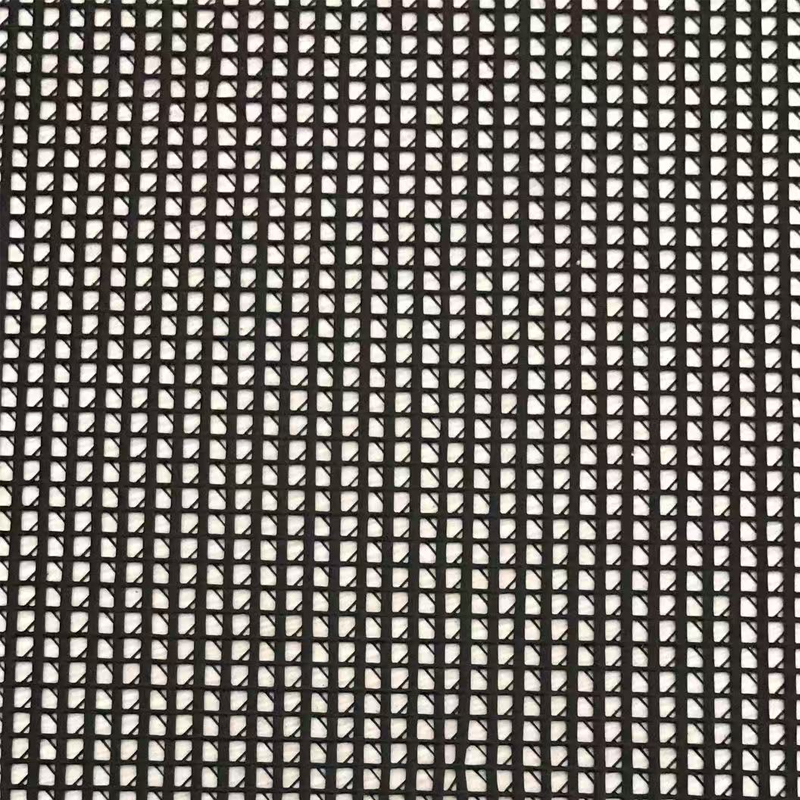
| Mesh fabric | Fencing screens, sunshade, ventilated covers | Open area and dimensional stability |
| Biogas membrane | Digester covers, gas storage bags | Gas barrier and chemical resistance |
| Knife-coated fabric | Tents, industrial curtains, technical covers | Coating uniformity and adhesion |
| Fireproof net | Construction safety netting, protective screens | Flame behavior and mesh strength |
| Intelligent luminescent material | Safety signage, guidance markings | Afterglow performance and surface durability |
Structural and covering products
Architectural membranes are used where the fabric is part of the building envelope. They are tensioned over a frame or cable system, so dimensional stability under load and creep resistance are as important as weather resistance. A smooth, low-surface-energy topcoat helps rain wash away dirt, which keeps the roof visually consistent over the years. Welded seams are the weakest zone of any membrane roof, and a fabricator will normally test seam strength in addition to base fabric strength.
PVC tarpaulins and knife-coated fabrics are the working core of the PVC fabric product category. They are used for truck covers, side curtains, warehouse partitions, event tents and temporary shelters. A tarpaulin is frequently folded, tied down, dragged and exposed to sun and rain, so buyers usually weigh abrasion resistance, anti-mildew treatment and low-temperature flexibility together with the headline strength figure.
Technical and specialty products
Inflatable fabrics must hold pressure through repeated inflation cycles, which makes the bond between coating and base cloth critical. Mesh fabrics trade solid coverage for airflow and light, and they are used where wind load, privacy and ventilation have to be balanced. Biogas membranes are engineered for gas retention and resistance to the chemical environment inside a digester. Fireproof nets and intelligent luminescent materials are safety-oriented products, where the specification is driven by the flame test or visibility requirement of the destination market rather than by general durability alone.
Fabric Weight by Product Category</h2 >
Fabric weight is the quickest indicator of which job a PVC fabric product is designed for, with open mesh at the light end and heavy knife-coated and biogas grades at the heavy end. Weight is expressed in grams per square meter and combines the base cloth and the coating. It is not a quality score on its own, because a heavier fabric is only better when the application needs the extra strength, stiffness or barrier thickness.
Reference Fabric Weight Midpoints by Category (grams per square meter)
The horizontal bar chart ranks seven categories by the midpoint of a typical weight range, and the spread runs from about 330 grams per square meter for mesh to about 1250 grams per square meter for heavy-duty knife-coated grades. Light tarpaulins and inflatable fabrics sit in the middle band, where the goal is a balance between handling comfort and mechanical strength. Architectural membranes and biogas membranes are heavier because their coating has to deliver long outdoor life or a reliable gas barrier. The midpoints are simplifications, since each category covers a range and a supplier can usually offer several weights within the same family. A practical use of this chart is to sanity-check an inquiry, because a request for a mesh fabric at 1000 grams per square meter or a membrane at 350 grams per square meter suggests that the application and the material class do not match.
When a buyer asks a PVC fabric manufacturer for a quotation, it helps to give a weight target as a range rather than a single number, for example 600 to 700 grams per square meter. This leaves room for the supplier to choose the base cloth and coating thickness that suits the strength and flexibility requirements. Tolerances on weight are normally stated in the sample specification, and a typical production tolerance is within a few percent of the nominal value.
Base Cloth Selection: Denier, Yarn Count and Finished Weight
For general-purpose outdoor covers, a 1000D by 1000D polyester base cloth is a common and balanced choice, while 2000D constructions are reserved for heavy-duty doors, curtains and structural uses. The denier describes the thickness of the yarn, and a higher number means a thicker yarn that carries more load per thread. The yarn count, written as threads per 10 centimeters or per inch in each direction, describes how tightly the cloth is woven and affects both strength and how well the coating anchors to the structure.
Typical Finished Weight by Base Yarn Denier (grams per square meter)
The column chart shows how finished weight tends to rise as the base yarn becomes thicker, moving from about 480 grams per square meter at 500D to about 1100 grams per square meter at 2000D. The increase is not perfectly linear, because coating thickness is adjusted for each class to reach the target surface and barrier properties. The step from 1000D to 1300D adds roughly 200 grams per square meter, which is a meaningful gain in strength but also a visible change in how the material handles during sewing and welding. Readers should treat the values as typical planning figures, since yarn count, coating penetration and topcoat all influence the final number. The main lesson is that denier selection should follow the load case: a 500D construction suits light covers and mesh backings, while a 2000D construction is more appropriate for doors and heavy curtains that experience repeated mechanical stress.
How to match denier to application
- 500D to 840D: light covers, sunshade, mesh backing and small inflatable items where handling comfort matters.
- 1000D: truck covers, side curtains, tent fabrics and general warehouse covers where strength and flexibility must be balanced.
- 1300D: larger tensioned covers, heavier tents and industrial partitions exposed to wind and frequent handling.
- 2000D: rolling doors, heavy curtains and structural items that face repeated flexing and high tensile demand.
A further point is the balance between warp and weft strength. A fabric used as a tensioned membrane needs strength in both directions, whereas a truck curtain may see more load along one axis. Asking the supplier for warp and weft figures separately is more informative than a single combined number, and it allows the designer to align the fabric roll direction with the main load.
UV, Weather and Temperature Performance of Coated PVC Fabric
Topcoat choice has the largest influence on how much strength a PVC fabric product keeps after long outdoor exposure, and fluoropolymer or acrylic lacquer finishes retain more than an untreated standard surface. Sunlight breaks down polymer chains slowly, and the plasticizer in flexible PVC can migrate toward the surface over time. A protective topcoat limits both effects, and it also reduces dirt pick-up, which is why premium outdoor structures usually specify a lacquered surface.
Illustrative Retained Tensile Strength Under Accelerated UV Exposure (percent)
The line chart compares three topcoat levels, and in this illustrative model the standard surface keeps about 72 percent of its original tensile strength after 3000 hours, the acrylic lacquer keeps about 84 percent, and the fluoropolymer lacquer keeps about 90 percent. The gap between the lines widens as exposure time grows, which means the benefit of a better topcoat appears mainly in long-life applications. For a temporary cover used for one season, the difference may be too small to matter. For a permanent canopy or a fixed warehouse partition, the retained strength after several years is the more relevant figure. The curves are a conceptual model and must not be read as a promise for any specific product, so project documents should reference the actual accelerated weathering report of the production lot. Buyers can use the chart to decide how much attention the topcoat deserves in their own service-life target.
Temperature range and cold flexibility
Coated PVC fabrics for general outdoor use are commonly specified for service temperatures from about minus 30 degrees Celsius to about plus 70 degrees Celsius. At the cold end, the plasticizer system determines whether the coating stays flexible or becomes stiff and prone to cracking during folding. Products destined for northern regions or winter logistics should therefore carry a cold-crack requirement in the specification. At the hot end, color choice matters, because dark fabrics absorb more solar energy and can run noticeably warmer than light ones. Anti-mildew treatment is also important in humid climates, where organic dirt on the surface can support growth if the fabric is stored damp.
Fire Performance and Safety Requirements for PVC Fabric Products</h2 >
The destination market decides the flame test, so the fire standard should be confirmed before the first sample is produced. PVC contains chlorine, which gives it inherent resistance to sustained burning compared with many other polymer fabrics, and flame retardant additives can improve behavior further. However, a requirement written in a tender or building code refers to a specific test method, and the formulation has to be developed with that method in mind.
Common references in international trade include European classifications such as M2, B1 and B2, and the American NFPA 701 test for textiles used in public assembly and temporary structures. Each method measures a different aspect, such as flame spread, after-flame time, dripping or char length. A fabric that satisfies one method does not automatically satisfy another, and some projects require more than one. For fireproof nets used on construction sites, the netting structure itself, the mesh size and the coating all enter the evaluation.
Steps to define a fire requirement
- Identify the country and the type of use, for example public assembly, temporary structure, construction site or industrial plant.
- Ask the local authority, project consultant or end customer which test method and class apply.
- Share the method and class with the PVC fabric manufacturer before sampling starts.
- Request a test report on the finished fabric, including any print or lacquer layers, because surface treatments can change flame behavior.
- Confirm that the report refers to the same construction and weight as the production order.
An often overlooked point is that printing, lacquering and lamination change the surface, and a flame report on the plain base fabric does not necessarily describe the finished item. Where a project involves printed graphics, the safest approach is to test the printed material or confirm with the supplier that the ink system has been evaluated together with the fabric.
Matching a PVC Fabric Product to the Application
No single PVC fabric product leads in every property, so the right choice comes from ranking the properties that matter most for the job. A membrane roof ranks UV durability and light transmission highly. A truck cover ranks tear resistance. An inflatable ranks airtightness. Writing down the top two or three requirements before contacting suppliers keeps the discussion focused and prevents over-specification in areas that do not affect the result.
Relative Property Profile of Three Fabric Types (scale of 1 to 5)
The radar chart compares an architectural membrane, an industrial tarpaulin and an inflatable fabric across five properties, using a relative scale where five is the strongest position among the three. The membrane scores highest for UV durability and also scores well for light transmission, which reflects its role as a long-life building skin. The tarpaulin reaches the top of the scale for tear resistance, in line with its use on trucks and in rough handling conditions. The inflatable fabric leads on airtightness, because its coating and weld system are designed to hold pressure. All three score similarly on printability, although the final print result depends on the topcoat and ink system. Because the scores are relative and simplified, they show a design direction rather than a measured value, and a real project should still be validated by sample testing.
Application examples
A contractor building a tensioned canopy for a transport hub would normally begin with an architectural membrane, a lacquered surface and a seam design reviewed by the structural engineer. A logistics company outfitting curtain-sided trailers would look at a 1000D tarpaulin with anti-mildew treatment and good cold flexibility. A manufacturer of inflatable play equipment would prioritize airtightness and weld strength and would run pressure tests on sample seams. A farm or energy project installing a digester would look at a biogas membrane with documented gas barrier and chemical resistance. Seeing these cases side by side helps buyers recognize that each belongs to a different branch of the PVC fabric product family.
Manufacturing Process, Quality Control and Factory Capability
Consistent quality in a PVC fabric product depends less on any single machine and more on process control from incoming yarn to final inspection. The main stages are base cloth inspection, compound preparation, coating or lamination, curing, surface finishing, slitting and winding, and final testing. At each stage, a measurable parameter, such as coating thickness, line speed, oven temperature or adhesion strength, is recorded so that deviations can be traced and corrected.
About the manufacturer
Anhui Kingtex Material Technology Co., Ltd. specializes in the R&D, production, and processing of new materials, including architectural membranes, PVC tarpaulins, PVC inflatable fabrics, mesh fabrics, biogas membranes, knife-coated fabrics, fireproof nets, intelligent luminescent materials, and others. The company has established a complete and scientific quality management system to ensure product quality control throughout the entire process.
Equipped with professional PVC cold lamination, hot lamination, coating, as well as a full set of testing and inspection instruments, the company lays a solid quality foundation for products with advanced production equipment and mature manufacturing technology. At the same time, a professional scientific research and technical team has been formed. Relying on core technological R&D capabilities, it continuously provides solid support for product innovation and stable quality.
We sincerely invite customers at home and abroad to visit our factory, negotiate cooperation, and seek common development.
What buyers should verify at the factory level
A factory visit or a remote audit is the most reliable way to judge whether a supplier can support a long-term program. Useful observation points include whether the plant operates its own coating and lamination lines, how raw materials are stored and identified, whether test instruments are calibrated, and how retained samples from each lot are kept. In-house testing equipment for tensile strength, tear strength, adhesion, weight, and seam strength shortens the feedback loop when a customer asks a technical question. A plant that runs both cold lamination and hot lamination alongside coating can recommend the most suitable route instead of fitting every request into one process.
Research and development capability matters for OEM and ODM projects, where the buyer often needs a custom width, a special color, a modified topcoat or a combination of properties that is not on the standard list. A technical team that can run small trials, interpret test results and adjust the formulation reduces the number of sampling rounds. For buyers who source several fabric types at once, such as a tarpaulin for covers, a mesh for screens and a fireproof net for site safety, a single supplier with several product lines can also simplify communication, documentation and shipment planning.
Specification Checklist for OEM and ODM PVC Fabric Orders</h2 >
A complete inquiry for a PVC fabric product states the application, the target weight range, the base cloth, the width, the surface finish, the fire requirement and the testing expectations. Inquiries that include these items usually receive a more accurate first sample, because the supplier does not have to guess. The table below turns the checklist into a working document that a buyer can send together with a drawing or a photo of the intended use.
| Item to state | Example | Why it matters |
|---|---|---|
| Application | Truck side curtain | Sets the product family and strength class |
| Weight range | 600 to 700 grams per square meter | Lets the supplier choose coating thickness |
| Base cloth | 1000D polyester, yarn count stated | Controls tensile and tear strength |
| Width and roll length | 2.5 meters, 50 meters per roll | Affects cutting yield and seam count |
| Surface finish | Acrylic lacquer, matte | Sets dirt resistance and appearance |
| Fire requirement | Method and class named by the end market | Determines additive system |
| Color and print | Color reference sample, logo artwork | Allows color matching and print testing |
| Test reports | Tensile, tear, adhesion, cold crack | Creates a record for acceptance |
After the checklist is sent, a good manufacturer will return questions, not just a sample. Typical clarifications include the expected lifespan, the climate at the installation site, how the fabric will be fastened, and whether welding or sewing is planned. These questions are a positive sign, because they show that the supplier is thinking about the use case and not only about filling an order.
Sampling and approval routine
- Request a physical sample large enough to test welding, sewing and folding, not only a color swatch.
- Agree in writing which properties are acceptance criteria and which values are only reference information.
- Keep an approved reference sample so that later production lots can be compared against it.
- For export shipments, confirm roll labeling, packing method and documentation before production begins.
Fabrication, Welding and Installation Practice</h2 >
Most field failures of a PVC fabric product occur at seams, edges and attachment points, not in the middle of the fabric, so fabrication quality deserves as much attention as material quality. PVC coated fabric is thermoplastic, which allows joining by high-frequency welding or hot-air welding. A properly made weld can approach the strength of the base fabric, while an under-heated or over-heated weld creates a weak line that opens under load or pressure.
Welding and seam design
Weld settings depend on coating thickness, ambient temperature and fabric type, so a fabricator should run test strips whenever a new roll or lot is started. A wider overlap generally spreads load more evenly, and rounded corners reduce stress concentration compared with sharp ones. Where the fabric carries a lacquer layer, the lacquer may need to be removed or the settings adjusted to ensure that the weld bonds the PVC layers and not the surface finish. Reinforcement patches at corners, grommets and tie-down points distribute concentrated loads and extend service life.
Tensioning and installation
Tensioned structures should be installed at the design pretension, and the structure should allow for re-tensioning after the first weeks, since fabric can relax slightly as it settles. Loose fabric flaps in the wind, which accelerates abrasion and fatigue at the edges. Contact with sharp metal edges, rough concrete or abrasive surfaces should be avoided by using protective tapes or edge profiles. For truck covers and curtains, correct strap placement and regular inspection of eyelets and hems reduce unplanned downtime.
Cleaning, Storage and Service Life Management
Regular, gentle cleaning and dry storage extend the useful life of a PVC fabric product more effectively than any later repair. Dirt on the surface holds moisture and can support mildew growth, and it can also absorb heat on dark areas. A soft brush or cloth with water and a mild detergent is usually sufficient, and strong solvents, abrasive pads and high-pressure jets at close range should be avoided because they can damage the topcoat.
Before storage, the fabric should be fully dry. Folded fabric kept damp can develop mildew and surface marks, and tightly creased folds can leave permanent lines in thinner coatings. Rolls should be kept horizontal, away from direct sun and away from heat sources. Stacking heavy items on rolls can deform the core and cause edge damage, so racking that supports the roll at both ends is preferable.
Small punctures and edge tears can be repaired with PVC patches and compatible adhesive or by welding on a patch. Repairs made early prevent a small defect from growing under wind and tension. A simple inspection routine, for example a quarterly walk-around for permanent structures and a pre-trip check for vehicle covers, is a practical way to catch wear at hems, eyelets and seams. Recording the installation date, the fabric lot and any repairs gives the owner a service history that helps plan replacement before failure.
At the end of service life, PVC fabric can be collected and processed through recycling programs where available, and buyers who need to meet environmental requirements should discuss material composition and applicable regional regulations with the supplier during the specification stage. Keeping this conversation early avoids last-minute changes after samples have been approved.
Common Specification Mistakes and How to Avoid Them
Most disappointing results with a PVC fabric product trace back to a specification gap rather than a material defect, and the gaps are usually easy to close at the inquiry stage. The mistakes below appear repeatedly in export projects across tarpaulin, membrane, inflatable and mesh categories, and each one has a simple preventive step.
Choosing by weight alone
Buyers sometimes treat grams per square meter as a quality ranking and ask for the heaviest option available. A heavier fabric adds handling effort, increases shipping volume and may be harder to fold or weld without improving performance for the actual use. A light cover that is tied down gently does not benefit from a 1100 gram construction, whereas a rolling door exposed to repeated flexing may need it. The better approach is to describe the load, the expected movement and the climate, and then let the supplier match weight, denier and coating to that description.
Ignoring the destination climate
A fabric that performs well in a temperate region can behave differently in a desert or in a cold northern logistics chain. Strong sunlight raises the importance of the topcoat and the UV package. Low temperatures raise the importance of the plasticizer system and the cold-crack requirement. High humidity raises the importance of anti-mildew treatment and of keeping rolls dry during shipping and storage. Stating the installation region in the inquiry takes one sentence and can change the formulation in a useful way.
Skipping seam and joint requirements
Many specifications describe the base fabric in detail and say nothing about welded or sewn joints. Because seams are where most field failures begin, a complete specification should state the minimum acceptable seam strength as a share of the base fabric strength, the overlap width, and the joining method. For inflatable items, a pressure hold test on a sample seam is a practical acceptance step. For tensioned membranes, the structural engineer normally sets the seam requirement, and the supplier should receive it before sampling starts.
Treating samples as a color check only
A small swatch is useful for color and hand feel, but it cannot show how the fabric welds, folds, prints or ages. Requesting a sample large enough for trial welds, fold tests and, where relevant, a short outdoor exposure check gives much more information. Keeping the approved sample on file also gives both parties a physical reference when a later production lot is compared.
Leaving test methods undefined
Phrases such as high strength or good weather resistance mean different things to different people. Replacing them with named test methods, minimum values and sample conditions turns a subjective wish into a checkable requirement. When both sides agree on which properties are acceptance criteria and which are reference values, disputes after delivery become much less likely, and the working relationship between buyer and manufacturer becomes smoother over repeated orders.
A short pre-order review list
- Does the inquiry state the application, the installation region and the expected service period?
- Are the base cloth, weight range, width and finish written down as a range or a value with tolerance?
- Is the fire test method named, and does the report cover the finished construction?
- Are seam strength, joining method and sample size agreed before production begins?
Frequently Asked Questions About PVC Fabric Products
Q1. What is a PVC fabric product made of?
A PVC fabric product is made from a polyester base cloth that is coated or laminated with a PVC compound. The base cloth provides strength and dimensional stability, while the PVC layer provides waterproofing, weather resistance, color and weldability. Additives such as UV stabilizers, flame retardant agents and anti-mildew agents are blended into the compound to match the intended use.
Q2. How do I choose between a tarpaulin, a membrane and an inflatable fabric?
Start with the main requirement. A tarpaulin suits covers and curtains where tear strength and flexibility lead. An architectural membrane suits permanent structures where color stability, cleanability and seam performance lead. An inflatable fabric suits pressure-holding items where airtightness and weld strength lead. If the project has more than one need, a manufacturer with several product lines can recommend a combination.
Q3. Which fabric weight should I request?
Weight depends on the application and base cloth. Light covers and mesh often fall in the 300 to 600 grams per square meter range, general truck covers and tent fabrics commonly sit between 600 and 900, and heavy-duty curtains, doors, membranes and gas membranes can reach 1000 and above. It is usually better to give a range and the target use, so the supplier can propose the right construction.
Q4. How is fire performance verified?
Fire performance is verified by testing the finished fabric against the method named by the destination market, such as M2, B1, B2 or NFPA 701. Because printing, lacquering and lamination can change surface behavior, the report should describe the finished construction. Ask the supplier for a report that matches the weight, color and finish of the production order.
Q5. Can the fabric be customized for OEM or ODM projects?
Yes, a manufacturer with its own coating, cold lamination and hot lamination lines and a technical team can usually adjust width, weight, color, topcoat and additive package. Providing the application, climate, target properties and any required test methods at the start shortens the sampling process. Approved reference samples help keep later lots consistent.
Q6. How can I extend the service life of PVC fabric?
Choose a topcoat suited to the sun exposure, make sure welds and seams are properly executed, keep the fabric at the intended tension, clean it with mild methods, store it dry, and repair small damage early. A simple inspection routine and a record of installation date, lot number and repairs make it easier to plan replacement before performance falls below the project requirement.
Related Products
Related News

We warmly welcome customers from home and abroad to visit our factory, negotiate cooperation, and create a bright future together.
Contact Information
- +86-13967331581
- +86-550-2356878
info@kingtexfabric.com
Address
- No. 12, Weiyi Road, Laian County Economic Development Zone, Chuzhou, Anhui, China
Get in Touch
Copyright ©Anhui Kingtex Material Technology Co, Ltd. All Rights Reserved. Custom Pvc Fabric Factory China pvc fabric waterproof manufacturer
