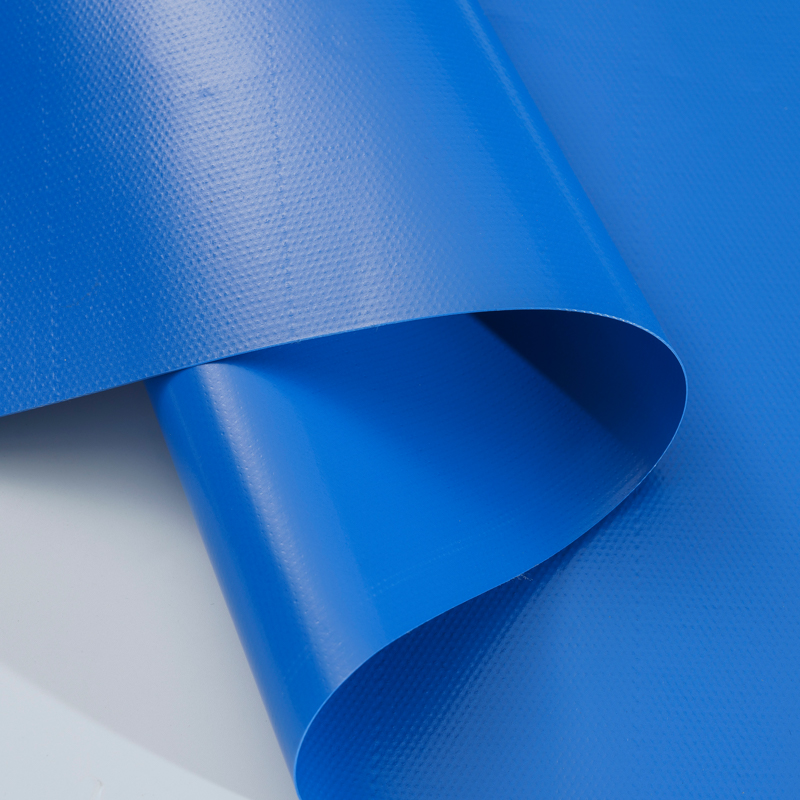
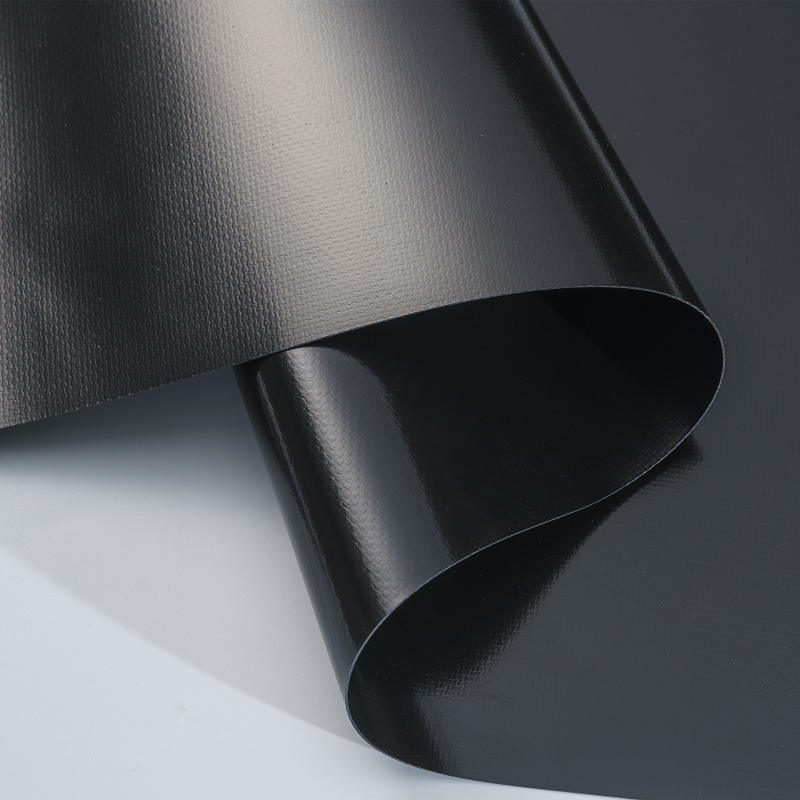
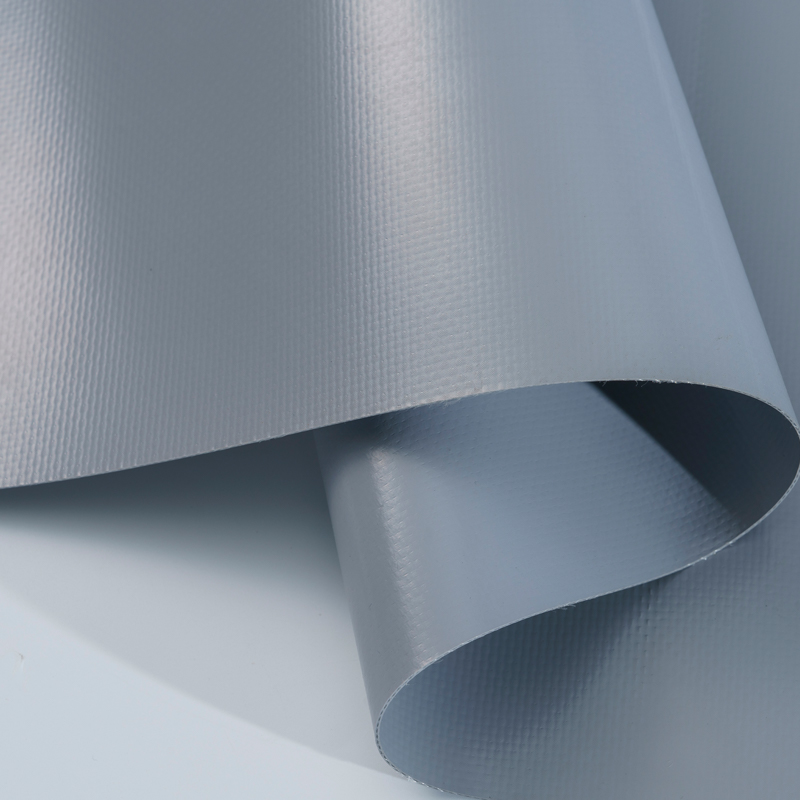
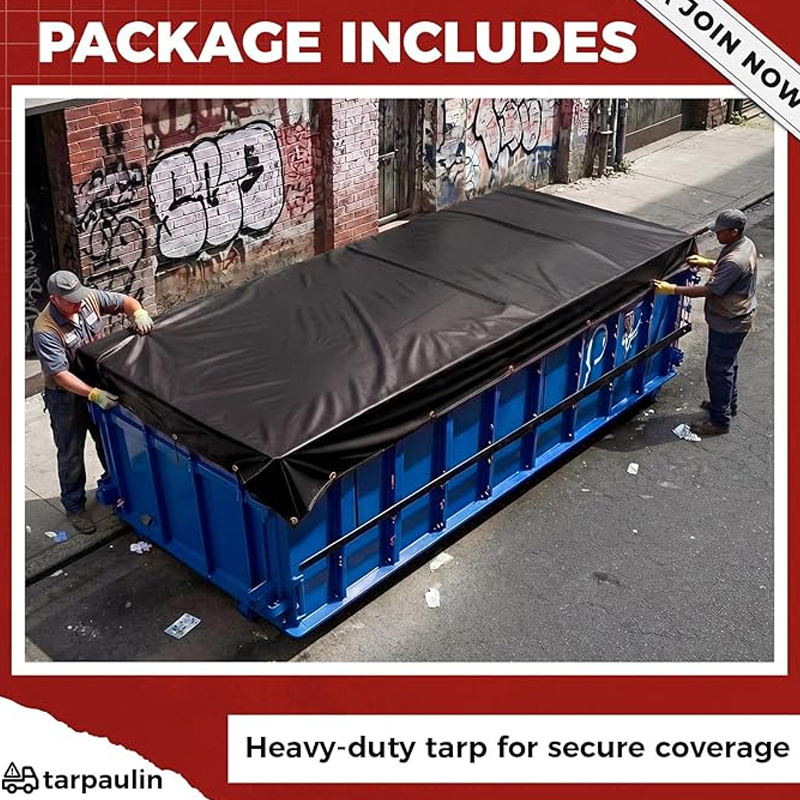
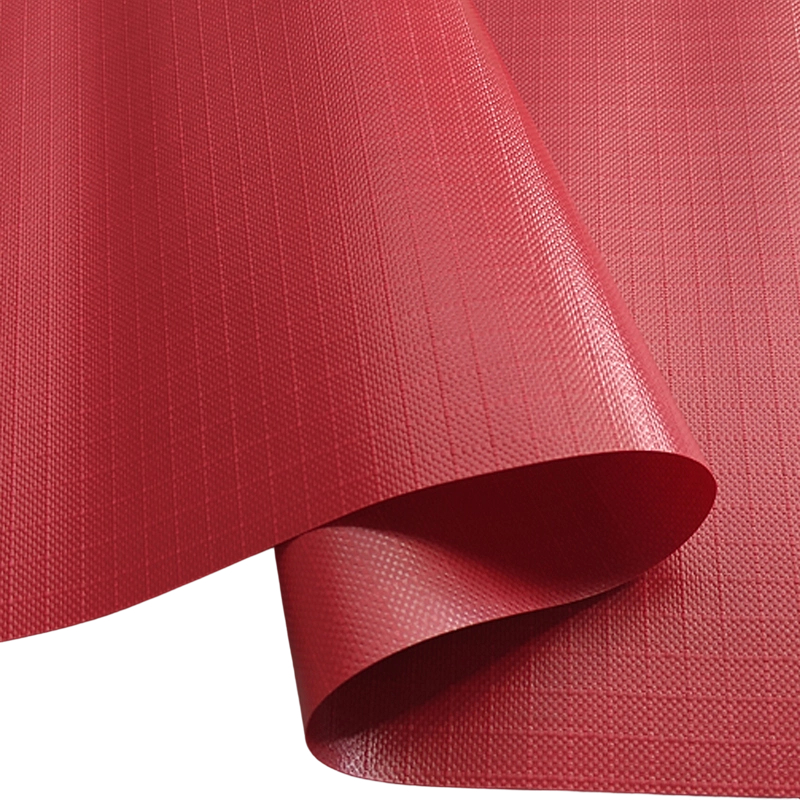
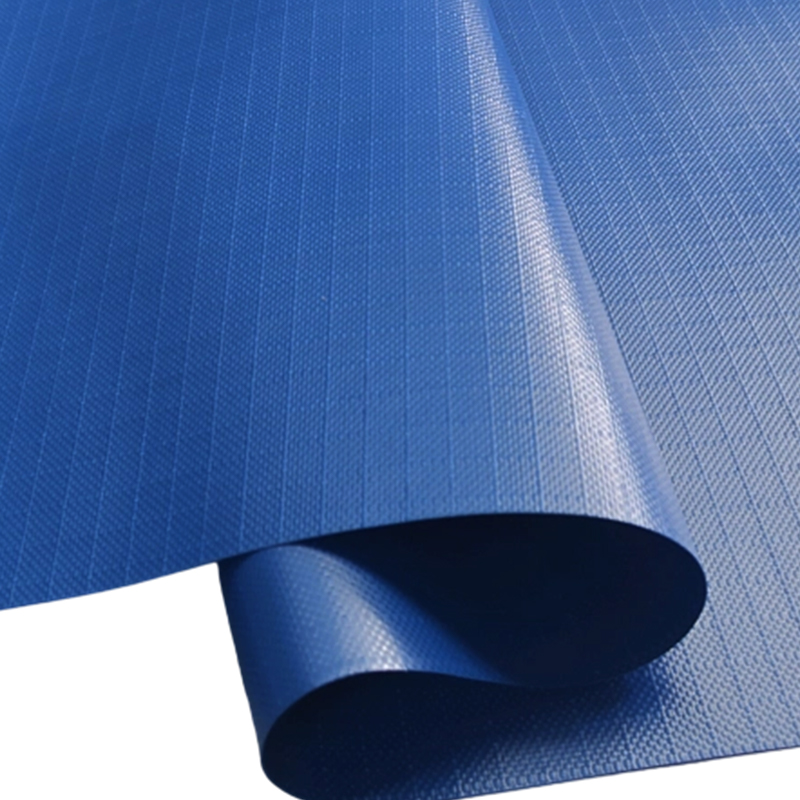
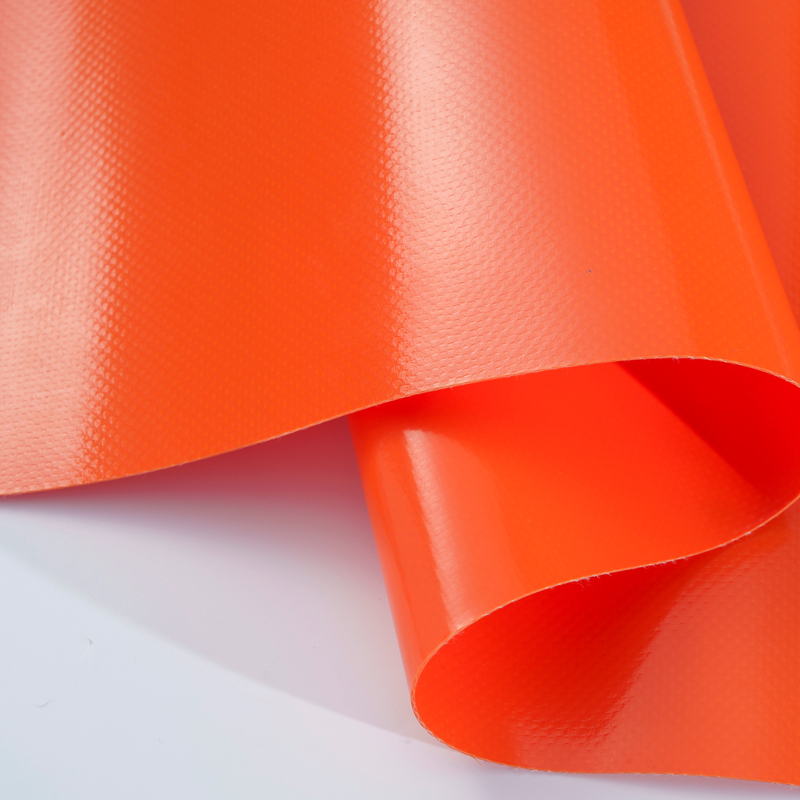
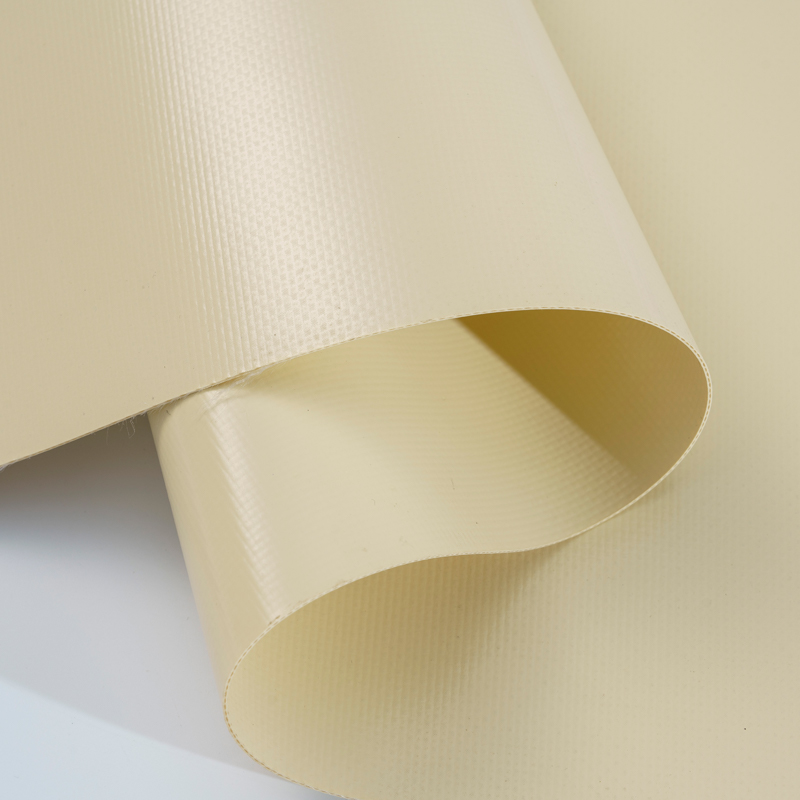
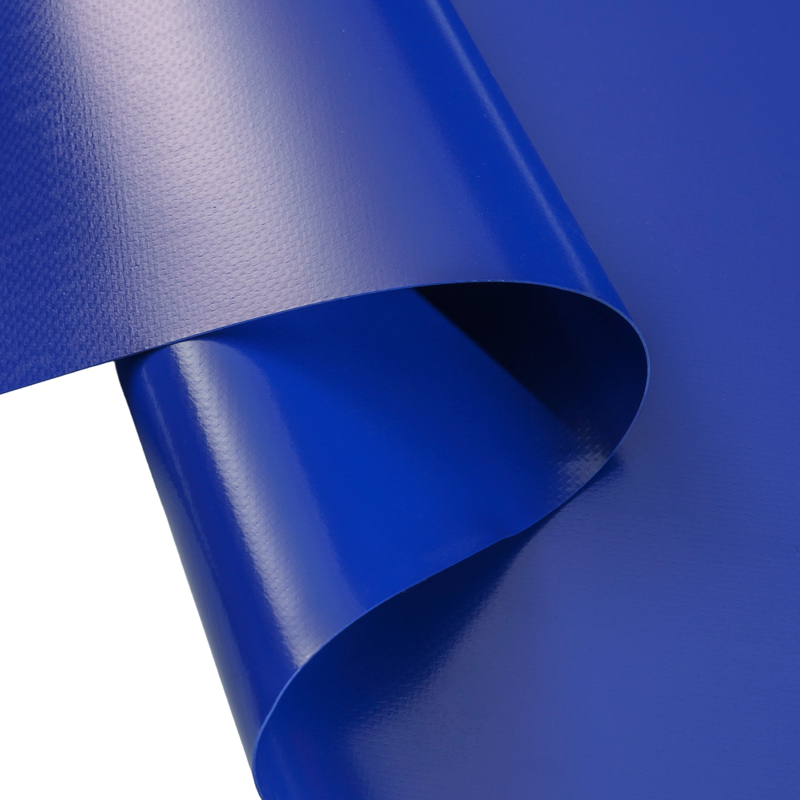
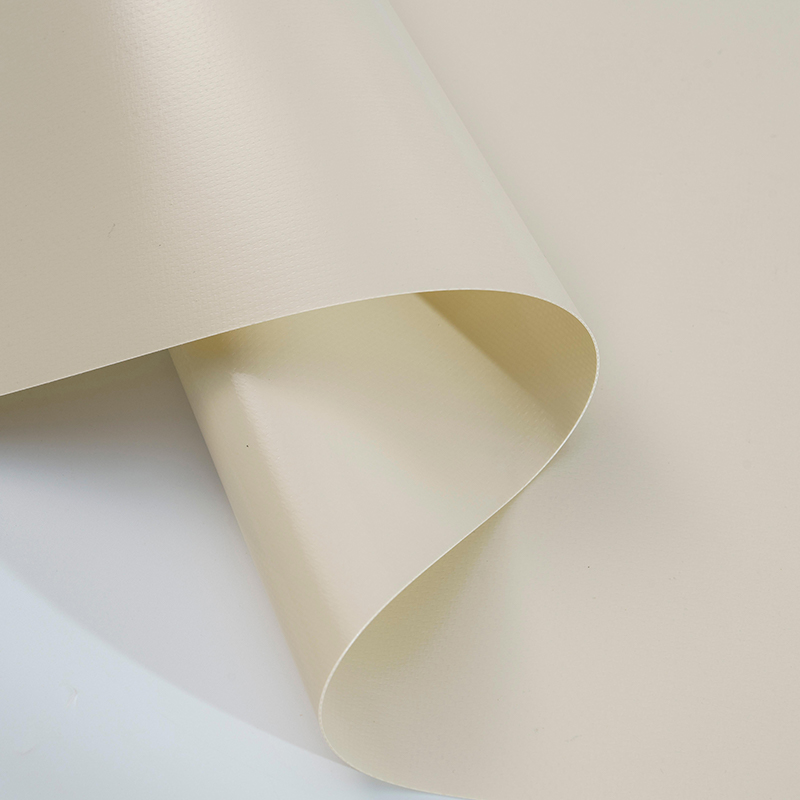
Product Overview 610gsm Reinforced PVC Coated Truck Cover Fabric is developed for truck covers and protective coverings where higher fabric strength and tear resistance are required. Different from standard PVC-coated fabrics, this material uses a 1000D × 1300D polyester yarn structure, providing a reinforced woven base that improves load-bearing performance and fabric stability.
Key Features Reinforced Yarn Structure for Higher Durability The fabric adopts a 1000D × 1300D polyester construction, with a stronger yarn configuration compared with conventional 1000D × 1000D fabrics. This reinforced structure helps improve mechanical stability and durability during transportation use.
The fabric provides improved resistance against tearing caused by cargo friction, tension, and repeated handling.
Double-Sided PVC Coating Protection PVC coating on both sides forms a protective surface layer that helps prevent water penetration and improves resistance to:
Rain and moisture Dust and dirt Surface abrasion Outdoor aging Balanced Strength and Flexibility
The fabric combines a 610g/m² weight with good tensile performance: Warp tensile strength: 3200 N/5cm Weft tensile strength: 3000 N/5cm
It provides a balance between structural strength and processing flexibility for different covering applications. Suitable for Customized Cover Production
Available in widths up to 3.2m, this reinforced PVC-coated fabric can be processed into different sizes of truck covers, trailer covers, and industrial protection covers.
Applications 610gsm Reinforced PVC Coated Truck Cover Fabric is commonly used for:
Product OverviewThe high-performance PVC Coated Tent Fabric Waterproof Flame Retardant is made of 10...
About Us
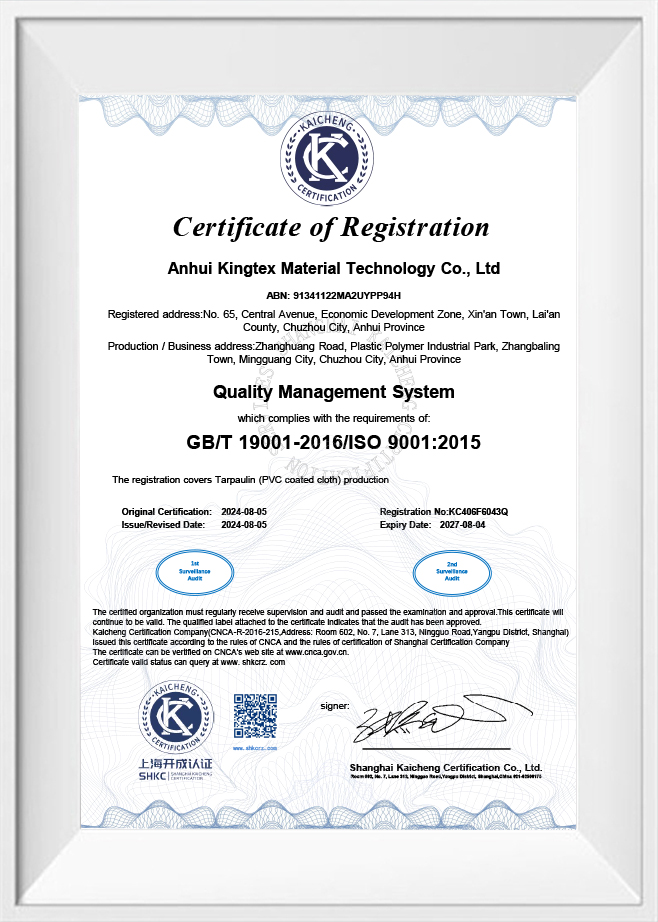
Anhui Kingtex Material Technology Co, Ltd.
As China 610gsm Reinforced PVC Coated Truck Cover Fabric Suppliers and OEM 610gsm Reinforced PVC Coated Truck Cover Fabric Factory, Anhui Kingtex Material Technology Co., Ltd. specializes in the R&D, production, and processing of new materials, including architectural membranes, PVC tarpaulins, PVC inflatable fabrics, mesh fabrics, biogas membranes, knife-coated fabrics, fireproof nets, intelligent luminescent materials, and others. The company has established a complete and scientific quality management system to ensure product quality control throughout the entire process.
Equipped with professional PVC cold lamination, hot lamination, coating, as well as a full set of testing and inspection instruments, the company lays a solid quality foundation for products with advanced production equipment and mature manufacturing technology. At the same time, a professional scientific research and technical team has been formed. Relying on core technological R&D capabilities, it continuously provides solid support for product innovation and stable quality.
We sincerely invite customers at home and abroad to visit our factory, negotiate cooperation, and seek common development.
PVC Inflatable Fabric, PVC Cover Material and PVC Mesh Fabric: A Practical Guide for B2B Buyers
PVC inflatable fabric, PVC cover material and PVC mesh fabric share the same polyester-and-PVC foundation, but each is specified for a different job: airtightness and weld strength fo...
Architectural Membrane Fabric, PVC Tent Fabric and Truck Cover & Side Curtains Fabric: A Practical Selection Guide
Architectural membrane fabric, PVC tent fabric and truck cover & side curtains fabric are all polyester base cloths coated with PVC, but each is tuned to a ...
PVC Fabric Product Guide: How to Select the Right Material for Structures, Covers, Inflatables and Industrial Use
A PVC fabric product performs reliably when four decisions are made in the right order: the base cloth construction, the coating weight, the topcoat finish, and the ...
610gsm Reinforced PVC Coated Truck Cover Fabric is a coated textile made for load covers that need extra strength at the places where covers fail first. A polyester scrim forms the core, PVC coatings on both faces seal it against rain and spray, and the finished fabric weighs 610 grams per square meter. The word reinforced describes added material, both inside the cloth and around the edges, corners and rope lines of the finished cover.
(2) Why Reinforcement Is Specified
A truck cover rarely fails in the middle of an open sheet. It fails at hems, eyelets, corners and rope crossings, where force from wind and tie down ropes gathers. Reinforcement puts extra layers at those points, so a 610gsm cover can carry a higher share of load without making the whole sheet heavier. Buyers who talk to a 610gsm Reinforced PVC Coated Truck Cover Fabric Factory usually want to see both the base fabric and the reinforcement plan described in one specification.
This guide explains the types of reinforcement, where they sit on a cover, how much material they add, how eyelet spacing changes the fit, and how buyers can brief a factory.
2. Structure and Working Principle
(1) Where Reinforcement Comes From
The two ring chart separates reinforcement into two levels. The inner ring splits the sources into reinforcement inside the cloth and reinforcement at panel level. Inside the cloth, the scrim yarn sets the base strength, and the coating build adds sealing depth and abrasion cover. At panel level, hems fold the edge into a doubled strip, and corner patches add layers at the corners. Webbing strips carry rope loads along the lines where ropes cross the cover, and welded seams join panels into a continuous sheet. The chart shows that a reinforced cover is the sum of six elements, so the specification should name each of them instead of relying on the weight figure alone.
(2) Coating and Welding
The scrim is sealed by PVC through one of three common routes. Knife coating spreads PVC paste with a blade and gels it in an oven. Hot lamination fuses pre-made film to the scrim under heat and pressure, and cold lamination bonds film and scrim with an adhesive system. Panels, hems and patches are then joined by high frequency or hot air welding, which fuses the PVC coatings into one continuous layer.
3. Reinforcement Layout on the Cover
The plan view below shows where a cover maker usually places reinforcement on a full cover.
The plan view shows the cover from above, with reinforcement zones marked in darker green. Corner patches sit at the four corners, where ropes pull in two directions at once. Edge hems run around the whole border and carry the rows of eyelets along the long sides. Two rope wear strips cross the cover, which mark the lines where ropes run over the sheet and rub on the surface. The open field area between them carries steady tension and does not need extra layers. A cover built this way places extra material where it is needed and keeps the rest of the sheet at the base weight. The drawing is a concept layout, and strip positions depend on the truck and the rope plan.
Comparison of standard and reinforced PVC coated truck covers
Item
Standard Cover
610gsm Reinforced Cover
Hems
Single fold
Doubled and welded
Corners
Plain fabric
Patch layers added
Rope lines
Bare fabric
Wear strips or webbing
Eyelets
Set in single layer
Set in doubled hem
Typical use
Light and occasional covering
Daily covering, long routes, sharp loads
4. How Much Extra Material Reinforcement Adds
Reinforcement adds weight, but the amount is smaller than many buyers expect. The chart below works through an example cover of 7 m by 4 m at 610gsm.
The bar shows the weight of an example cover broken into its parts. The base fabric of 28 square meters at 610gsm weighs about 17.1 kg. Doubled hems along the 22 meter border add about 1.3 kg, and four corner patches add about 0.2 kg. Together the reinforcement adds about 1.6 kg, which is roughly 9 percent more material than the bare sheet. This extra material sits exactly where ropes and wind load gather, so a small increase in weight gives a large increase in margin at the weak points. The figures come from a simple area times weight calculation, and real covers also carry webbing, ropes and eyelets, so weights vary by design.
5. Eyelet Spacing and Fit
Eyelet spacing decides how many tie down points a cover has, and therefore how flat it sits on the load. The three layouts below show wide, standard and close spacing on the same size of cover.
The three drawings show the same cover with eight, twelve and sixteen tie down points. Wide spacing needs fewer ropes and takes less time to fix, but the sheet can stand away from the load between points. Standard spacing balances fixing time and fit, and it suits most general loads. Close spacing gives a flatter fit and less flutter in wind, because each short span of fabric is held down by its own rope. Each eyelet sits in a doubled hem, so more points also mean more reinforced material along the edge. The point counts are examples only, and the best spacing depends on cover size, load shape and the way the crew works.
6. Common Types and Application Cases
(1) Common Types
Common types of 610gsm reinforced PVC coated truck cover fabric and their characteristics
Type
Construction Note
Characteristics
Typical Use
Knife-coated grade
Blade applied PVC paste
Even film, soft hand feel
Covers folded after each trip
Laminated grade
Film bonded to scrim
Smooth, uniform face
Printed and colored covers
Lacquered grade
Surface lacquer on outer face
Easier rinsing, stable print
Fleet covers with logos
Webbing reinforced grade
Welded straps along rope lines
Spreads rope load
Long routes, sharp loads
Custom color grade
Pigmented coating, matched lots
Supports fleet color
OEM and fleet programs
(2) Application Cases
Daily haulage fleets: covers that are spread, tied and removed several times a day.
Timber, steel and building materials: loads with sharp ends that rub on rope lines and edges.
Bulk loads in tippers: sand, gravel and grain covered for road transport.
Container and port yards: covers handled by crews under time pressure.
Cover makers and trailer builders: OEM programs that need a defined reinforcement plan and matched rolls.
7. Selection Points
A clear brief helps a fabric factory match the base fabric and the reinforcement plan to the way the cover will be used.
State the truck or trailer type, cargo type and the size of the cover.
Describe how often the cover is used, the routes and the climate.
Confirm the weight class, with 610gsm for daily covering with reinforcement.
Specify hem width, corner patches and wear strips or webbing along rope lines.
Choose eyelet spacing for the load shape and the crew routine.
Select color, lacquer finish, print area, roll width and welding method.
Request samples and test covering, tensioning and folding on a real load.
8. Factory Capability Behind the Fabric
A reinforced cover is only as consistent as the roll and the welding that make it. Anhui Kingtex Material Technology Co., Ltd. works as a China PVC fabric waterproof manufacturer and stretch PVC fabric factory. Its range covers architectural membranes, PVC tarpaulins, PVC inflatable fabrics, mesh fabrics, biogas membranes, knife-coated fabrics, disaster prevention nets and intelligent luminescent materials.
The company operates PVC cold lamination, hot lamination and coating equipment, together with a full set of testing instruments and a dedicated R&D team. For buyers looking for a 610gsm Reinforced PVC Coated Truck Cover Fabric Factory or a reinforced PVC truck cover fabric manufacturer, this means scrim, coating build and testing can be reviewed together, including OEM, custom color and roll width requests. Customers from all sectors are welcome to visit the facility for tours and business talks.
9. Maintenance Guidance
Reinforced zones are the first places to check, because they carry the most force.
Wash with clean water, mild detergent and a soft brush, then rinse fully.
Avoid strong solvents, which can soften the coating and weaken welds.
Inspect corner patches, hems, eyelets and wear strips before each season.
Pad sharp cargo edges and pull ropes evenly so the sheet lies flat.
Repair small cuts early with a compatible PVC patch applied by heat welding.
Dry the cover completely before folding, and store it away from sharp objects and oils.
10. Frequently Asked Questions
What is 610gsm Reinforced PVC Coated Truck Cover Fabric?
It is a polyester scrim coated with PVC on both faces, with a finished weight of 610 grams per square meter, used for truck covers that carry extra reinforcement at hems, corners and rope lines.
What does reinforced mean on a truck cover?
It means added material both inside the cloth and around the panel, such as doubled hems, corner patches, wear strips and webbing along rope lines.
How much heavier is a reinforced cover?
In the example of a 7 m by 4 m cover, reinforcement adds about 1.6 kg to a base of about 17.1 kg, which is about 9 percent. Real covers vary with design.
What should be sent to a 610gsm Reinforced PVC Coated Truck Cover Fabric Factory for a custom order?
Useful details include cover size, truck type, cargo type, route and climate, color, lacquer finish, print area, roll width, eyelet spacing and the reinforcement plan.
How are reinforcement layers attached?
Hems, patches and webbing are joined by high frequency or hot air welding, which fuses the PVC coatings into one continuous layer.
How should the cover be cleaned and stored?
Wash with mild detergent and water, rinse well, dry completely, and fold it in a dry place away from sharp objects and oils.


 English
 русский
 Français
 Español
 عربى