 English
 русский
 Français
 Español
 عربى
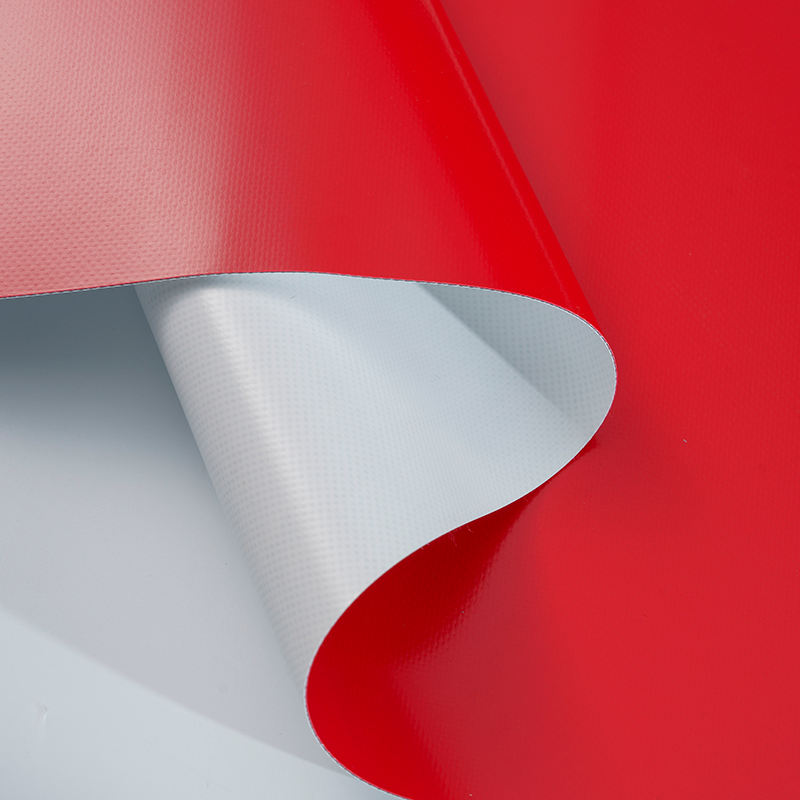
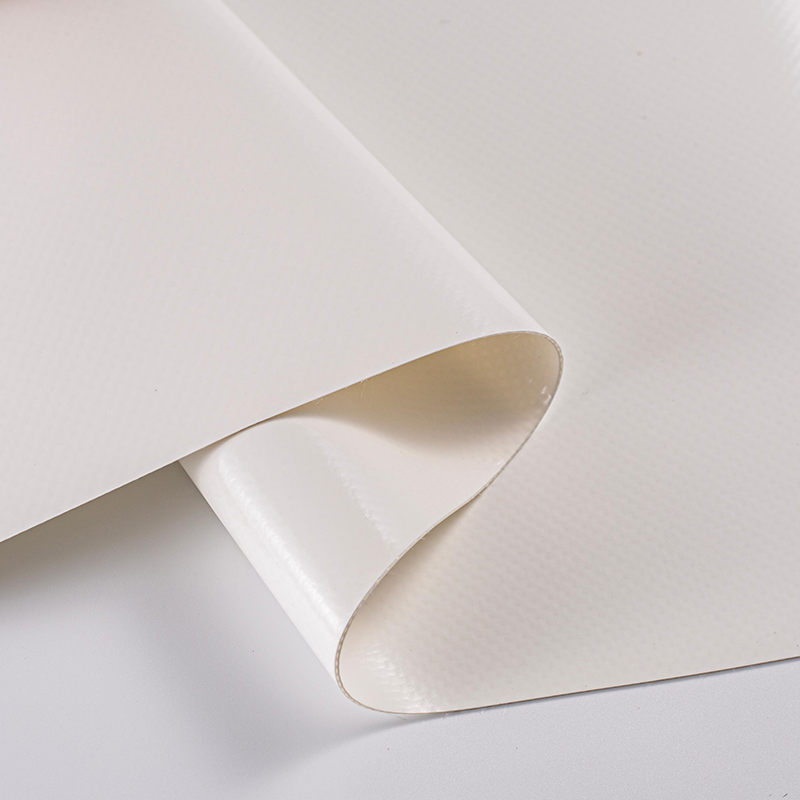
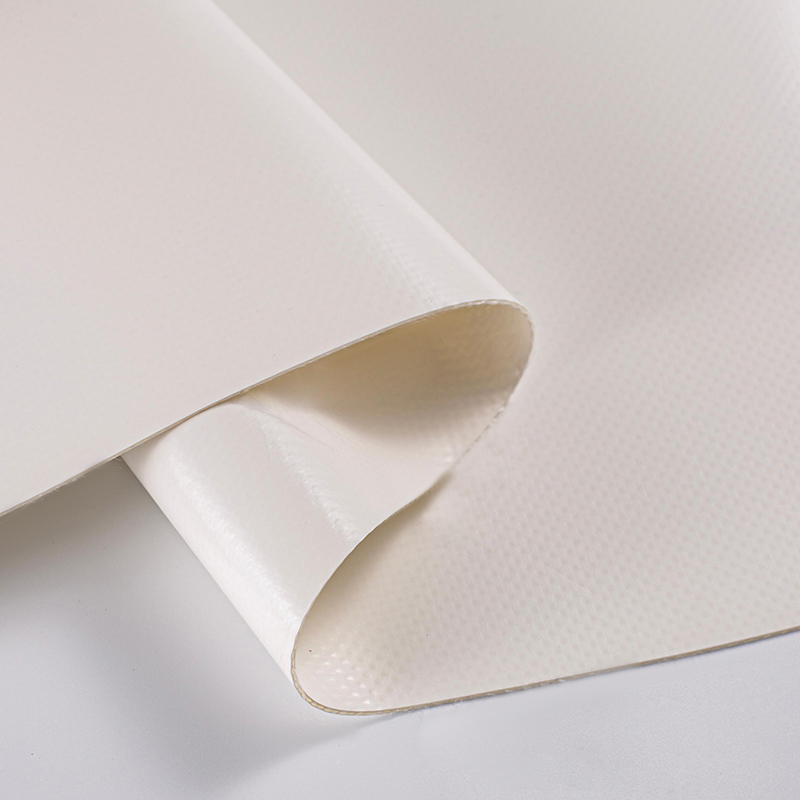
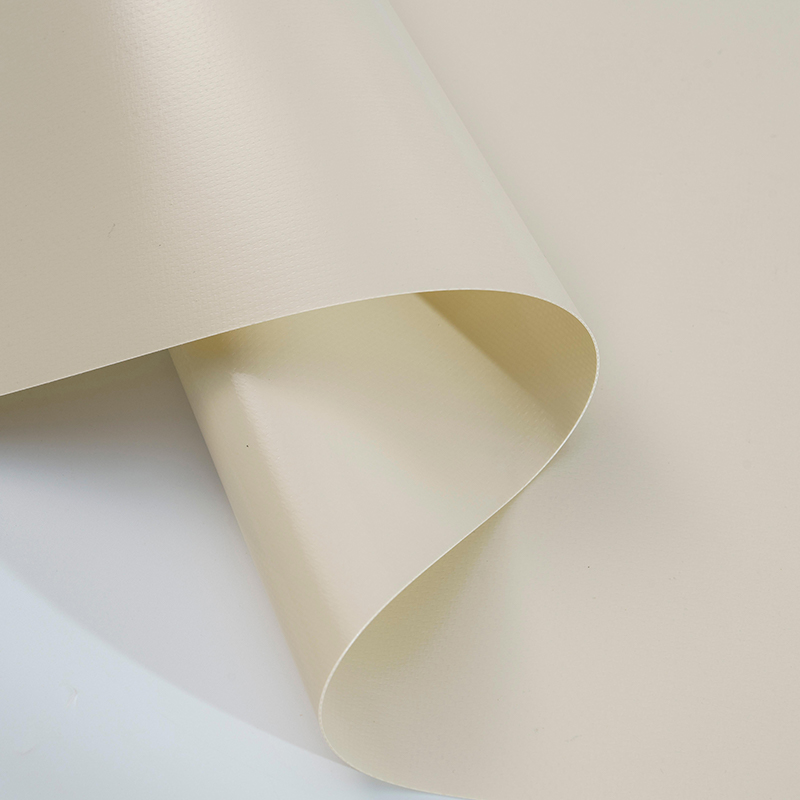
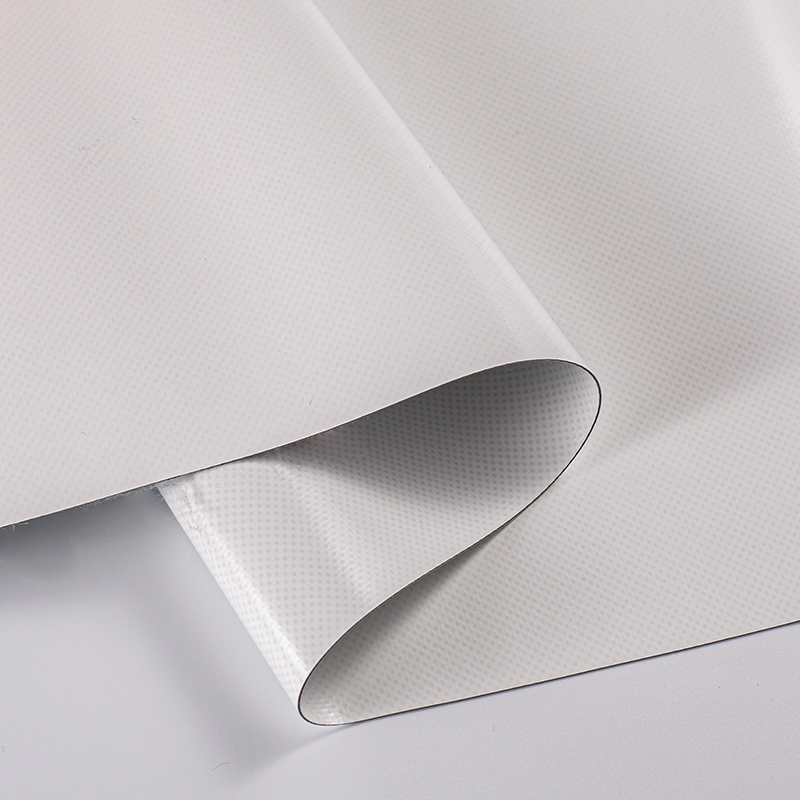
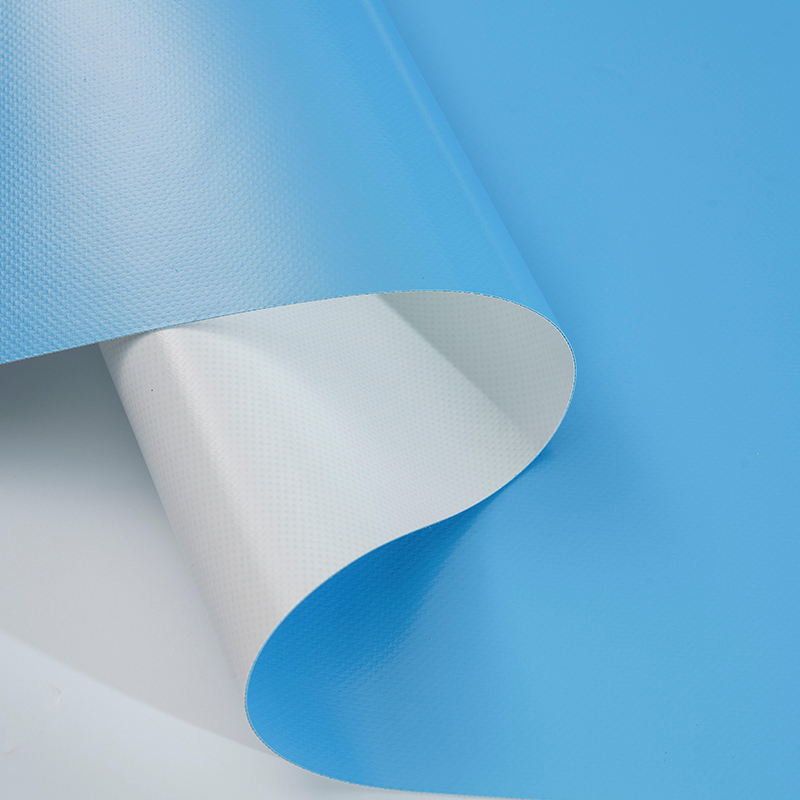
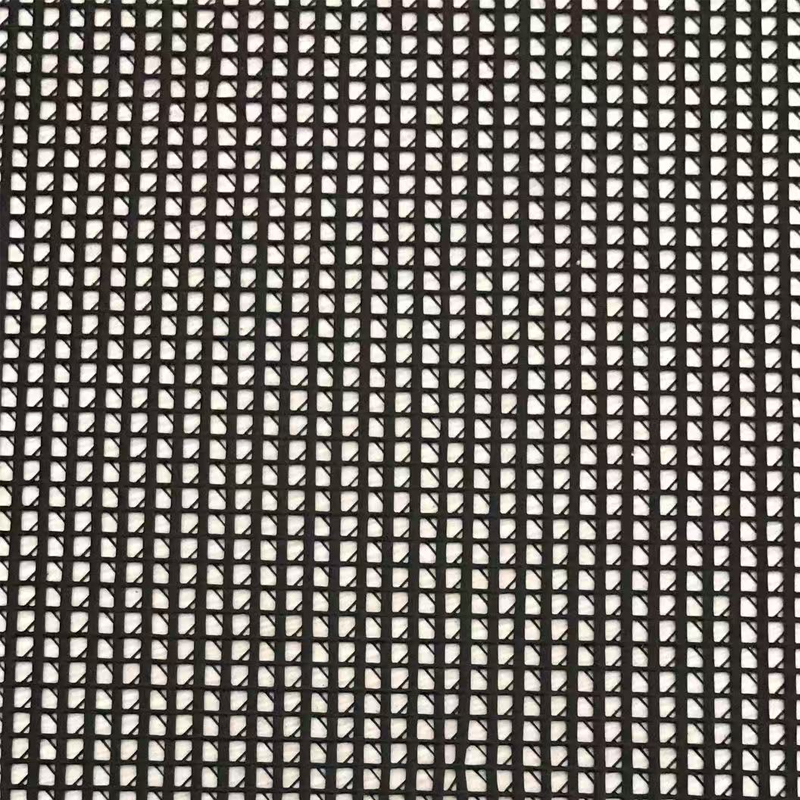
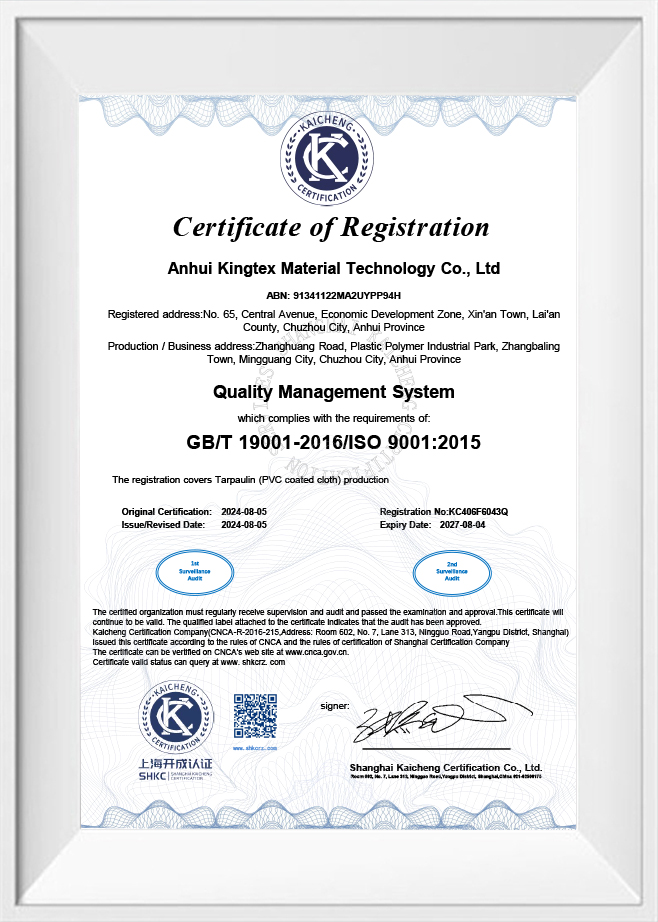
As PVC Mesh Cloth Manufacturer and PVC Mesh Fabric Factory, Anhui Kingtex Material Technology Co., Ltd. specializes in the R&D, production, and processing of new materials, including architectural membranes, PVC tarpaulins, PVC inflatable fabrics, mesh fabrics, biogas membranes, knife-coated fabrics, fireproof nets, intelligent luminescent materials, and others. The company has established a complete and scientific quality management system to ensure product quality control throughout the entire process.
Equipped with professional PVC cold lamination, hot lamination, coating, as well as a full set of testing and inspection instruments, the company lays a solid quality foundation for products with advanced production equipment and mature manufacturing technology. At the same time, a professional scientific research and technical team has been formed. Relying on core technological R&D capabilities, it continuously provides solid support for product innovation and stable quality.
We sincerely invite customers at home and abroad to visit our factory, negotiate cooperation, and seek common development.

PRODUCTS
PVC Mesh Fabric Manufacturer
CATEGORIES
PVC Mesh is a functional coated fabric made from high-strength polyester yarns woven into an open mesh structure and then processed with PVC coating or PVC dipping technology. Its unique mesh design provides excellent strength while maintaining good breathability and air permeability, effectively reducing wind resistance and making it highly suitable for outdoor applications.
Key Features
High Strength and Durability
Manufactured with high-strength polyester yarns, PVC Mesh offers excellent tensile strength and tear resistance, ensuring long-term durability in demanding environments.
Excellent Weather Resistance
The PVC coating provides outstanding waterproof, mildew-resistant, UV-resistant, and temperature-resistant performance, enabling reliable outdoor use under various weather conditions.
Excellent Breathability
The open mesh structure allows free air circulation, significantly reducing wind pressure and improving overall stability in outdoor applications.
Customizable Functional Properties
Special functions such as flame retardancy, oil and stain resistance, anti-static properties, and fluorescent effects can be added according to customer requirements.
Flexible Width Options
Available in different widths, with a maximum width of up to 3.2 meters to meet various application needs.
Applications
Advertising & Printing
Widely used for construction site fence banners, scaffold advertising, bridge railing banners, outdoor advertising boards, and other large-scale outdoor displays.
Transportation
Suitable for truck side curtains, truck covers, cargo nets, and other transportation protection applications.
Construction & Engineering
Used for construction safety nets, dust control nets, sunshade nets, fences, and other protective solutions.
Daily & Industrial Applications
Applied in luggage, document bags, sunshade structures, breathable tent windows, machinery protective covers, and various industrial products requiring ventilation and durability.
About Us
Anhui Kingtex Material Technology Co, Ltd.
PVC Mesh Fabric Manufacturer
As a pvc mesh fabric manufacturer and custom PVC mesh cloth factory in Anhui, China, Kingtex produces functional mesh fabrics from high-strength polyester woven mesh, processed with PVC impregnation or dipping technology. Our range is built for outdoor advertising, construction protection, transportation covers, shading and industrial ventilation applications where strength and controlled air permeability are both required.
We control the full chain from polyester yarn selection, weaving, PVC treatment, slitting and final inspection. With professional PVC cold lamination, hot lamination, coating and testing instruments, we supply mesh fabrics as roll goods for further conversion or as custom substrates for finished products such as scrim banners, safety nets, dust-control nets, fence panels, window screen and roller blind fabrics.
Product Range and Positioning
Our PVC mesh fabric program is centered on the 100% Polyester Base Cloth PVC Impregnated Mesh, a configurable open-weave material rather than a single fixed specification. The mesh is supplied in multiple yarn counts and mesh densities so the buyer can match tear strength, light blockage and air permeability to the end use.
Core specification range
- Support cloth: 100% polyester woven mesh
- Coating: PVC impregnation mesh fabric
- Width: up to 3.2 m
- Total weight: 130–450 g/m²
- Yarn counts: 250D, 420D, 500D, 840D, 1000D
- Mesh density: 9×9, 12×12, 14×14, 18×12 mesh/inch
| Grade | Typical fit | Yarn / mesh direction |
|---|---|---|
| Lightweight printing mesh | Banner facings, fence wraps, short-term displays | 250D–420D, 12×12 |
| Standard outdoor mesh | Scaffold advertising, dust-proof nets, sun shades | 420D–500D, 14×14 |
| Reinforced mesh | Construction safety nets, cargo covers, heavy fencing | 840D–1000D, 18×12 |
Process and Application Fit
PVC mesh fabric is selected where a coated fabric must allow airflow while retaining dimensional stability. The open structure reduces wind pressure on large outdoor surfaces, which is why the material performs well on construction site fence banners, scaffold advertising, bridge railing banners and outdoor advertising boards. In transportation, the same characteristics suit truck side curtains, truck covers and cargo nets where trapped wind can destabilize loads or covers.
For construction and engineering, our mesh is used as a base for safety nets, dust-control nets, sunshade nets and protective fencing. Daily and industrial applications include luggage and document bags, sunshade structures, breathable tent windows, machinery protective covers and any ventilated product that needs tear resistance and weather endurance.
Material and Specification Meaning
Because decision-makers in this category work from a supplier sheet, it is useful to state plainly what each value controls.
- Yarn denier (D): Higher denier means heavier polyester filament yarn, which increases tear resistance and dimensional stability. Our standard spectrum is 250D to 1000D.
- Mesh density: The number of warp and weft openings per inch. A tighter mesh such as 18×12 gives higher coverage and strength; a more open mesh such as 9×9 gives maximum breathability and lower wind resistance.
- Total weight: Combined base cloth and PVC impregnation. Lighter mesh (130–250 g/m²) suits printing and short-term banners; heavier mesh (350–450 g/m²) suits construction netting, covers and long-term outdoor structures.
- PVC impregnation: The coating penetrates the fibers rather than only forming a surface film, giving strong adhesion and resistance to delamination in UV and rain exposure.
We can customize yarn count and mesh density, and add functional properties such as flame retardancy, oil and stain resistance, anti-static behavior and fluorescent effects according to your project requirement.
Capacity, Accuracy and Automation Integration
Our production is based on professional PVC processing lines for cold lamination, hot lamination and coating, supported by a full set of testing and inspection instruments. For mesh fabric, the critical process control points are yarn tension during weaving, consistent PVC pickup through impregnation, width stability after drying and uniform mesh opening. We track these parameters so that downstream buyers can slit, print, cut or weld the material without dimensional surprises.
Although PVC mesh is usually not a precision automation component, it must interface cleanly with common converting equipment. Our maximum width of 3.2 m reduces the number of seams on large banner assemblies and improves installation efficiency. Roll goods are supplied in stable tension and layer-controlled winding to suit printing, die-cutting or sewing lines.
Quality Control and Acceptance
We operate a complete and scientific quality management system covering raw material intake, weaving, coating, finishing and final inspection. Our factory is equipped with testing instruments that allow us to verify total weight, width, yarn count, mesh density and visual surface quality before dispatch. The product specification is tested according to recognized standards, including DIN EN ISO 2286-1 for width, DIN EN ISO 2286-2 for total weight, DIN EN ISO 2060 for yarn count and DIN EN 1049-2 for weave density.
For project acceptance, we agree with the customer on the dimensional tolerances, roll length, winding direction, edge finish and acceptable splice count before production. Samples are reviewed first, and production retains batch records for traceability.
Installation, Maintenance and Serviceability
Because PVC mesh fabric is a converting substrate, installation practice is defined by the end customer: printing houses mount it on banner frames or tensioning systems; construction contractors fix it to scaffolding with cable ties, rope or clips; tent manufacturers sew or weld it into breathable windows. We support this stage by supplying clean, straight selvedges, consistent roll tension and documented width and weight data for each lot.
Maintenance is simple: the PVC surface resists moisture, mildew and most atmospheric pollutants, so the mesh can be cleaned with water and mild detergent. For long-term outdoor structures, periodic inspection of tensioning points and edge fixings is the main service requirement. We keep records of the base formulation so repeat orders can be matched.
Information We Use to Configure Your Solution
To prepare a precise proposal, we need the following project data from you:
- End use: printing mesh, safety/dust net, transport cover, shading, tent window, luggage or industrial application
- Required width and roll length
- Target total weight range (130–450 g/m²)
- Required strength or mesh density
- Color, printing requirements or special functions such as flame retardancy, UV resistance, anti-static or fluorescent finish
- Quantity and delivery schedule
Send these details through the product page form or contact our factory directly. We will recommend a configuration, confirm the specification sheet and supply samples before full production.
FAQs
What is the difference between PVC mesh fabric and coated tarpaulin?
PVC mesh fabric has an open weave structure that allows air to pass through, reducing wind load on large installations. Coated tarpaulin uses a denser woven base and a closed PVC layer for full waterproofing and airtightness. Mesh is chosen for breathable outdoor media, netting, shading and protective wrapping where airflow matters; tarpaulin is chosen for complete coverage against rain and wind.
Can you make custom mesh density and width?
Yes. We configure the fabric in yarn counts from 250D to 1000D and mesh densities such as 9×9, 12×12, 14×14 and 18×12. Maximum width is 3.2 m. Tell us the end use and we will adjust the construction so that light permeability, strength and wind behavior match the project.
What functional finishes are available?
Depending on the application, we can add flame retardancy, oil and stain resistance, anti-static properties and fluorescent effects. These are selected during the coating formulation stage and verified before shipment.
How do you ensure the PVC coating stays bonded to the mesh?
We use a PVC impregnation process in which the coating penetrates the polyester fibers rather than only sitting on the surface. This produces strong adhesion and resistance to delamination during outdoor exposure. Process control covers PVC pickup and drying so the final weight and hand feel are consistent across the batch.
Do you support sample orders before bulk production?
Yes. We invite customers to review samples before bulk production. For custom specifications, we first confirm the yarn count, mesh density, weight, width and functional requirements, then produce samples for your evaluation and approval.
Related Products and Categories
Our portfolio also includes Wholesale Pvc Fabric Product Suppliers, Pvc Fabric Product Factory, Architectural Membrane Fabric Manufacturer for applications with different operating ranges, interfaces or integration requirements.

We warmly welcome customers from home and abroad to visit our factory, negotiate cooperation, and create a bright future together.
Contact Information
- +86-13967331581
- +86-550-2356878
info@kingtexfabric.com
Address
- No. 12, Weiyi Road, Laian County Economic Development Zone, Chuzhou, Anhui, China
Get in Touch
Copyright ©Anhui Kingtex Material Technology Co, Ltd. All Rights Reserved. Custom PVC Mesh Cloth Manufacturer China PVC Mesh Fabric Factory
